If you’re a small business owner selling liquid products—think craft sauces, skincare serums, pet treats, or cleaning supplies—you’ve probably been there: standing over a 5-gallon bucket of product, using a hand pump or a messy funnel and bottle, wondering how you’ll scale without adding hours to your workday or breaking the bank. When I started as a filling pump supplier back in 2014, I heard that exact line from so many of my first customers: a mom-and-pop candle maker in Ohio who was filling 100-oz soy wax tins by hand, a small-batch herbal tincture brand in Texas that was losing $50 a week to overfilled or underfilled bottles, a craft soda company in Oregon that couldn’t keep up with farmers market demand without hiring a second employee just to fill bottles. Back then, most filling solutions were either industrial-grade machines priced for large corporations (think $10k+ for a unit that needs a dedicated operator and regular maintenance) or basic hand pumps that slowed work to a crawl and had zero consistency. That’s why we built our line of semi-automatic filling pumps—because small businesses don’t need industrial overkill, they need something that works with their workflow, their budget, and their growth. Filling Pump
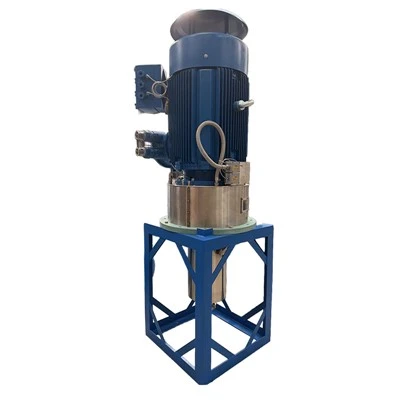
Let’s start with what “semi-automatic” actually means for a small operation, because there’s a lot of confusion here. A fully automatic filling machine moves bottles from conveyor belt to filler to capper, requires setup by a technician, and is designed for high-volume production (1,000+ bottles a day). A manual filling pump is just that: you squeeze a handle, measure the product, and pour it into a bottle, no electricity, no extra parts. Our semi-automatic pumps sit right in that sweet spot. They use a foot pedal or a push handle to activate the filling mechanism, so you control when product dispenses, but the pump does all the measuring and consistent dispensing work for you. That means no more guessing how much liquid goes into each bottle—no more underfilled jars that leave customers disappointed, no more overfilled bottles that waste product and cut into profits. For small businesses, consistency isn’t just a quality thing; it’s the thing that keeps repeat customers coming back. If your 4-oz lip balm bottle is sometimes 3.8 oz and sometimes 4.2 oz, people will notice. If every single one is exactly 4 oz, they’ll trust your brand enough to keep buying.
One of the biggest mistakes we see small business owners make when looking for filling equipment is thinking they have to choose between price and performance. A lot of folks will grab the cheapest hand pump they can find on Amazon, only to replace it every 3 months because it clogs with thick products like lotion or hot sauce, or it stops measuring accurately after a few uses. Others will save up for an industrial machine, only to realize it’s way too big for their garage or home studio, and they can’t justify the cost when they’re only filling 200 bottles a week. Our semi-automatic pumps are priced starting at under $500, which is a fraction of industrial equipment, and they’re built specifically for the products small businesses make. We use food-grade, chemical-resistant materials—no cheap plastic that leaches into your product or breaks down after a few batches. Our pumps work with thin liquids like cider vinegar, thick liquids like honey or body butter, even abrasive liquids like cleaning solutions or essential oil blends. We’ve had customers tell us they use the same pump for 5 years now, filling everything from 1-oz tincture bottles to 1-gallon spray jugs, with only basic cleaning between batches. That’s the kind of value that matters when you’re running a small business: equipment that pays for itself in 3-6 months by reducing product waste and speeding up filling time.
Let’s talk about time, because time is money for small business owners. If you’re filling bottles by hand, how long does it take to do 100 units? Let’s do the math: a quick survey of our customers showed that most hand-filling 4-oz bottles take about 10 minutes per 10 bottles. That’s 60 bottles an hour. With our semi-automatic pump, that number jumps to 250 bottles an hour. That means if you’re filling 500 bottles a week (which is a common volume for small craft brands), you’re cutting your filling time from 8 hours a week to 2 hours a week. Suddenly, you have 6 extra hours to spend on marketing, or making new products, or spending time with your family instead of hunched over a bucket of liquid. For a lot of our customers, that’s the biggest win. I remember a candle maker in Chicago who told us she was working 12-hour days, 6 days a week, just to keep up with online orders. After switching to our semi-automatic filling pump, she was able to cut her workweek by 20 hours, hire a part-time helper for packaging, and launch a new line of essential oil blends because she had the time to develop it. That’s the kind of impact we’re here for, not just selling a pump, but helping small businesses grow without burning out.
Another big plus for semi-automatic filling pumps is their flexibility. Small businesses change all the time: you might switch from 4-oz lip balm bottles to 8-oz tins, or add a new product line like liquid soap or pet shampoo. Our pumps let you swap out the measuring nozzle in 2 minutes—no tools, no technician, no waiting for a replacement part. That’s a huge advantage over industrial machines, which are built for one specific product type and bottle size. We even sell optional nozzles for different viscosities, so if you start with thin lotions and later add thick body scrubs, you don’t have to buy a whole new pump. We also have pump models that work with both pump bottles and spray bottles, which is perfect for brands that sell multiple types of products from the same workspace. I’ve heard from more than one customer who uses the same pump to fill their skincare line and their cleaning supply line, just switching out the nozzle and doing a quick rinse between batches. That’s the kind of versatility that makes sense for a small business, where you don’t have extra space or extra budget for multiple machines.
Wait, but what about cleaning? A lot of people worry that semi-automatic pumps are hard to clean, especially if they’re working with food or skincare products. We designed our pumps with that in mind. All the parts that touch the product (the nozzle, the pump head, the liquid chamber) are completely disassemblable, and they’re dishwasher safe on the top rack. Even for thick products like honey or hot sauce, you can take apart the pump, rinse it with warm water right after filling, and have it clean and ready for the next batch. We also include a cleaning brush with every pump, and a step-by-step guide for deep cleaning if you’re switching between product types or using abrasive liquids. One of our pet product customers told us she used to spend 30 minutes cleaning her old hand pump, and now she spends 5 minutes—time she uses to restock her shelves for the next day. That’s a small detail, but it makes a huge difference in your daily workflow.
Of course, no piece of equipment is perfect, and semi-automatic filling pumps aren’t for every small business. If you’re a new brand only filling 10-20 bottles a week, a basic hand pump might be enough to get you started while you figure out your production volume. If you’re already filling 5,000+ bottles a day, you might outgrow a semi-automatic pump and need to look into full automatic equipment. But for the vast majority of small businesses—from 50 to 1,000 bottles a day—semi-automatic filling pumps are the sweet spot. They’re not too expensive, they’re not too big, they’re easy to learn, and they give you the consistency and speed you need to grow.
I want to be clear about something: we’re not just selling a filling pump. We’re a supplier that’s worked with hundreds of small business owners, so we understand the unique challenges you face. We’ve made mistakes along the way too—early on, we sold a pump that wasn’t compatible with thick creams, and we went back to the drawing board to redesign it until it worked for every product. We’ve helped customers troubleshoot setup issues over a phone call at 9 p.m. after a long day of filling, we’ve sent replacement nozzles for free when a customer spilled a little product, we’ve even helped a startup calculate how much pump they need for their projected growth. That’s the kind of support you don’t get from a big industrial equipment company, and it’s the reason we stay small ourselves—so we can actually talk to the people we’re selling to, not just a number in a sales report.
If you’re reading this, chances are you’re at that point where hand-filling is holding your business back. You’re tired of wasting product because you pour too much or too little. You’re tired of working late every night to fill orders. You’re tired of telling customers you’ll be a few days late because you’re stuck at the filling station. A semi-automatic filling pump can fix all that, and it’s an investment that will pay for itself in no time. We’ve helped brands just like yours cut filling time by 70%, reduce product waste by 80%, and free up time to focus on what you do best: making great products and connecting with your customers.
If you’re ready to stop letting filling hold you back, we’d love to talk through your specific needs. Tell us what products you make, what bottle sizes you use, and how many bottles you fill a week, and we can help you pick the right pump for your business, no pressure, no upselling something you don’t need. We’re here to help small businesses succeed, and that starts with the right equipment. Don’t let filling keep you from growing your brand—reach out, and let’s find the solution that works for you.
High Pressure Pump References:
- Small Business Administration. (2022). "Operations & Equipment for Small Liquid Product Brands." U.S. Small Business Administration.
- National Association for the Self-Employed. (2021). "Cost-Saving Equipment for Small Craft Businesses." NASE Business Research Report.
- Craft Beverage Association. (2023). "Efficient Filling Solutions for Small Batch Beverage Producers." CBA Industry Guide.
- International Journal of Small Business Management. (2022). "Workflow Efficiency and Product Consistency in Liquid Product Start-Ups." Vol. 18, No. 2.
- Skincare Business Association. (2022). "Supply Chain and Production Tools for Small Skincare Brands." SBA Industry Best Practices.
Hangzhou Turbo Energy Technology Co., Ltd.
As one of the most professional filling pump manufacturers and suppliers in China, we’re featured by quality products and good price. Please rest assured to buy advanced filling pump made in China here from our factory. We also accept customized orders.
Address: C712, Block C, Westlake International Science and Technology Building, Huaxing Branch Road, Xihu District, Hangzhou, Zhejiang, China.
E-mail: sales@turboenergytech.com
WebSite: https://www.hangzhouturboenergy.com/
