Yo, what’s up guys! As a Canbus cable supplier, I get tons of questions from customers about different aspects of Canbus cables. One question that pops up quite often is, "What is the mechanical strength of a Canbus cable?" Well, let’s dive right into it. Canbus Cable
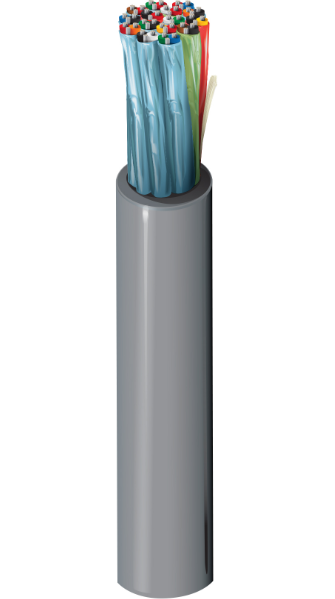
First off, let’s talk a bit about what Canbus cables are. Canbus, short for Controller Area Network bus, is a communication protocol that’s widely used in vehicles, industrial automation, and other applications. Canbus cables are basically the lifelines of these systems, carrying data and signals between different components. And just like with any important part, the mechanical strength of these cables is super important.
So, what exactly do we mean by mechanical strength when it comes to Canbus cables? It’s all about how well the cable can handle physical stress without breaking or losing its functionality. There are a few key factors that contribute to the mechanical strength of a Canbus cable.
1. Conductor Material
The conductor is the part of the cable that actually carries the electrical signals. Most Canbus cables use copper conductors because copper is an excellent conductor of electricity. But not all copper is created equal. High – quality, oxygen – free copper is often used in better Canbus cables. This type of copper is more ductile, which means it can be bent and stretched without breaking. It also has better resistance to corrosion, which helps maintain its integrity over time. For example, if you’re installing a Canbus cable in a vehicle that’s exposed to the elements, a cable with oxygen – free copper conductors will last longer and be more reliable.
2. Insulation Material
The insulation around the conductors is crucial for protecting them from physical damage and electrical interference. Common insulation materials for Canbus cables include PVC (polyvinyl chloride) and TPE (thermoplastic elastomer). PVC is a popular choice because it’s cheap and offers good insulation properties. However, it’s not as flexible as TPE. TPE, on the other hand, is more flexible and can withstand more bending and twisting. It also has better resistance to abrasion, which is important if the cable is going to be rubbed against other components in a tight space.
3. Jacket Material
The outer jacket of the Canbus cable provides an extra layer of protection. It shields the cable from environmental factors like moisture, chemicals, and UV rays. Materials like polyurethane (PU) and polyethylene (PE) are often used for the jacket. PU jackets are very tough and resistant to wear and tear. They can handle rough handling and are suitable for industrial environments. PE jackets, on the other hand, are lighter and more flexible, but still offer good protection.
4. Stranding and Twisting
The way the conductors are stranded and twisted also affects the mechanical strength of the cable. Stranding refers to the process of combining multiple small wires to form a single conductor. A stranded conductor is more flexible than a solid conductor of the same cross – sectional area. Twisting the conductors together helps reduce electromagnetic interference and also makes the cable more resistant to bending. When a cable is twisted properly, it can better withstand the forces applied during installation and use.
Now, why is the mechanical strength of Canbus cables so important? Well, in automotive applications, for example, these cables are constantly subjected to vibrations from the engine and the movement of the vehicle. If the cable doesn’t have enough mechanical strength, it can break or develop a short circuit, which can lead to all sorts of problems, from malfunctioning sensors to complete system failures.
In industrial automation, Canbus cables are often installed in areas where they can be knocked or pulled accidentally. A strong cable will be less likely to break in these situations, ensuring the smooth operation of the entire system.
Let’s look at some real – world scenarios. Suppose you’re working on a large – scale industrial automation project. You have a Canbus cable running through a crowded machine room, where it might get caught on moving parts or stepped on by workers. If you choose a cable with poor mechanical strength, it could break easily, causing downtime for the entire production line. On the other hand, if you use a high – strength Canbus cable, it can withstand these harsh conditions and keep the system running smoothly.
Another example is in the automotive aftermarket. If you’re installing a new Canbus – enabled device in your car, like a custom gauge cluster or a performance tuner, you’ll want to use a cable that can handle the rigors of daily driving. A cable that can stand up to the constant vibration, temperature changes, and potential physical damage will ensure that your new device works properly for a long time.
To test the mechanical strength of Canbus cables, manufacturers use a variety of methods. Tensile strength tests are used to measure how much pulling force a cable can withstand before breaking. Bending tests are done to see how many times a cable can be bent back and forth without damage. Abrasion tests simulate the wear and tear that a cable might experience in real – world use.
As a Canbus cable supplier, I always make sure that our cables meet high standards of mechanical strength. We source the best materials and use advanced manufacturing techniques to ensure that our cables are tough and reliable. Whether you’re working on a small DIY project or a large – scale industrial installation, you can count on our Canbus cables to get the job done.
If you’re in the market for Canbus cables, don’t just focus on the price. Consider the mechanical strength and other important factors like electrical performance and environmental resistance. A high – quality cable might cost a bit more upfront, but it can save you a lot of headaches and money in the long run.

So, if you’re looking for top – notch Canbus cables with excellent mechanical strength, get in touch with us. We’re here to help you find the right cable for your specific needs. Whether you have questions about our products, need technical support, or want to place an order, just reach out. We’ll be happy to have a chat and work with you to make sure you get the best Canbus cable solution.
Fire Protection Cable References:
- "Automotive Electrical and Electronic Systems" by William H. Crouse and Donald L. Anglin
- "Industrial Communication Technology Handbook" by Peter Welander
Zhejiang Chatnow New Material Technology Co., Ltd.
Zhejiang Chatnow New Material Technology Co., Ltd. is well-known as one of the leading canbus cable manufacturers and suppliers in China, specialized in providing high quality customized service. Please feel free to wholesale high-grade canbus cable at competitive price from our factory.
Address: Building 12, No.9 Huajin Road, ZhouWangMiao Town Innovation Center, Haining, Zhejiang 314400
E-mail: info@chatnow-cable.com
WebSite: https://www.chatnow-cable.com/
