Hey everyone, if you’re in the game of stamping small parts—whether it’s for automotive connectors, electronics housings, medical device clips, or even those tiny brackets that hold power tools together—you know the die is make or break. I run a small stamping parts shop, and for years we’ve learned the hard way that picking the wrong die material will either crash your production (hello, cracked dies that mean late orders) or kill your profit (expensive dies that only last a handful of runs). Today I’m breaking down the common stamping die materials we actually use and recommend, not the textbook stuff that sounds good on paper but tanks when you’re running 24/7 jobs. Stamping Small Parts
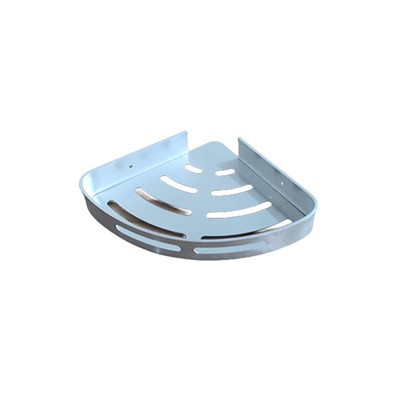
First off, let’s get one thing straight: small stamping parts aren’t “small” when it comes to die stress. A 0.5mm thick stainless steel connector tab going through 100,000+ runs isn’t just bending metal—it’s putting tiny, repeated pressure points on every inch of your die. So the material you choose has to balance hardness, toughness, wear resistance, and cost. No one’s got a bottomless budget, and no one wants a die that needs replacement every 5,000 parts.
Let’s start with the bread and butter for most low-to-medium volume small parts: tool steel. Wait, not all tool steel is the same—don’t just go grabbing the cheapest rod you find. For us, the workhorse here is D2 tool steel. If you told me 10 years ago D2 was overkill for small parts, I’d have argued my latest job proved you wrong. Let’s be real: D2 is air-hardening, which means it doesn’t warp when you heat treat it—huge for small, precise parts. Warp a die that’s only 10mm wide, and you’re tossing it. What’s it good for? Most carbon steels, aluminum, brass—common stuff for electronics, appliances, even general hardware. We run D2 dies for connector terminals all the time, and those last us anywhere from 80,000 to 120,000 runs before we need to touch up the edges. The downside? It’s a little prone to chipping if you’re stamping super hard material (like 300 series stainless) or if your press has a tiny misalignment. But for 90% of the small stamping jobs we get, D2 is our go-to.
If D2 is the workhorse, then O1 tool steel is the cheapo workhorse for even lower volume, less demanding jobs. Think: prototype runs, small batches of decorative metal parts, or soft materials like copper for wiring terminals. O1 is oil-hardening, so it’s easier to machine than D2—perfect if you’re making one or two dies for a prototype that only needs 10,000 to 20,000 parts. It’s less wear-resistant than D2, though—run it too hard, and you’ll get burrs on your parts way before you hit 20k runs. We use O1 all the time for custom prototype work; when a customer needs a test run for their new smart watch’s tiny band clips, O1 is fast to machine and way cheaper than D2 for a one-off job.
Now, what if you’re stamping harder stuff? Like 400 series stainless steel, titanium, or even thick copper-nickel alloys for medical implants? D2 won’t cut it here—you need something with way higher wear resistance. That’s where S7 tool steel comes in. S7 is shock-resistant tool steel, and let me tell you, it’s a game-changer for high-stress small parts. We used it for a customer making tiny titanium clips for knee replacements—those clips are stamping through 1.2mm thick titanium, no small feat. S7 doesn’t chip like D2 does under repeated impact, and its wear resistance is like 30% higher than D2 for hard materials. The catch? It’s more expensive, and it takes longer to machine because it’s tougher. But when you’re doing high volume (like 200k+ runs) on hard small parts, S7 is worth every extra penny. We’ve had S7 dies last over 250k runs on medical stainless, and the parts still come out burr-free.
Wait, there’s another tool steel that’s popping up more lately for ultra-high volume jobs: M2 high-speed steel. Yeah, it’s the stuff they use for drill bits, so you know it’s hard. We don’t use it every day, but when we have a customer stamping billions of tiny aluminum pins for smartphone chargers, M2 is the way to go. It’s got insane abrasion resistance—way more than D2 or S7. We ran a M2 die for a client that needed 1 million aluminum pins, and the die was still going strong after that. The downside? It’s brutal to machine. If you’re not experienced with high-speed steel, you’ll mess up the die before you even heat treat it. So we only recommend M2 for jobs that are super high volume and use soft, abrasive materials (aluminum, thin brass) that wear dies out fast.
Now, let’s get into the non-tool steel stuff—because not all small stamping jobs need expensive tool steel. For ultra-low volume, super simple parts, like a tiny bracket for a gift box or a cheap metal clip for office supplies, we use cold-finished carbon steel, like 1018 or 1045. It’s cheap, super easy to machine, and if you only need 1,000 to 5,000 parts, it works fine. The problem? No wear resistance. Run it more than 5k parts, and the die will get rounded edges, leading to burrs on your parts. We only use carbon steel for prototype jobs where the customer isn’t sure their design will work yet—no point wasting money on D2 for a job that might get scrapped after 100 parts.
Wait, there’s a material we’ve started using more for small, highly complex parts that need super tight tolerances: carbide. Tungsten carbide, to be exact. Carbide is like the rockstar of die materials—its hardness is off the charts, way more than any tool steel. We use it for parts that need tolerances within 0.01mm, like optical component clips or tiny gears for medical devices. A carbide die will last 5x longer than even S7 or M2—we had a job where a carbide die for 0.8mm stainless steel gears ran 1 million parts without needing any touch-ups. The catch? It’s expensive—like, 10x more expensive than D2. And it’s super brittle. Drop it, or run it with even a tiny misalignment, and it will crack clean in two. We only recommend carbide for jobs where high volume and tight tolerances are non-negotiable. If you’re making 10,000 parts, carbide is overkill. But if you’re making 1 million and can’t afford downtime from die changes, it’s worth it.
Let’s also talk about what we avoid like the plague for small stamping dies. We used to use cast iron for small dies years ago, and that was a nightmare. It’s soft, wears out in 500 runs max, and chips way too easy. For small parts, you need something that can hold a sharp edge, and cast iron can’t do that. We also stay away from low-grade tool steels that are sold as “premium”—you get what you pay for. A $50 D2 rod vs a $100 D2 rod is night and day; the cheap stuff has more impurities, so it cracks easier when you heat treat it.
Now, here’s the thing I wish more people knew: the right die material isn’t just about the material itself—it’s about matching it to your job. Let’s break it down quick so you don’t overspend or get bad parts:
- Prototype runs (100-5,000 parts): O1 tool steel or carbon steel. Fast, cheap, easy to adjust if your design changes.
- Medium volume (5,000-100,000 parts) on soft materials (aluminum, brass, thin stainless): D2 tool steel. Balances cost and wear resistance perfectly.
- High volume (100,000+ parts) on hard materials (thick stainless, titanium): S7 tool steel. Tough enough to handle impact, wears well, not crazy expensive.
- Ultra-high volume (1 million+ parts) or ultra-tight tolerances: Tungsten carbide. Worth the cost if downtime kills your business.
- Super low volume, simple parts: Carbon steel. No need to waste money on premium steel for a one-off job.
We’ve messed up this matching more times than I can count early on. A few years back, a customer came to us with a job for 20,000 tiny stainless steel clips—we used O1 steel, thinking it would be fine. By run 8,000, the die edges were rounding, and we were sending parts back with burrs. We re-did it with D2, and the rest of the 12,000 parts were perfect. That mistake cost us a few hundred bucks, but it taught us to ask way more questions before picking a die material: how many parts do you need? What material are you stamping? What’s your tolerance requirement? How fast do you need the die?
Another tip: don’t forget about die coatings, even if you pick the right material. We send all our high-volume dies out for a TiN (titanium nitride) coating, which adds a super thin, hard layer that makes the die way more wear-resistant. It’s like adding armor without making the die more brittle. We did this on a D2 die for 50,000 aluminum connector pins, and it doubled the die’s lifespan—game changer.

At the end of the day, when you’re stamping small parts, the die is the unsung hero. You could have the perfect design, the right material for your part, but a bad die means nothing. We’ve built our business over 12 years by picking the right die material for every single job, no matter how small. Whether you need 10 custom prototype parts or 1 million high-volume medical stamping parts, we’ve got the experience to hook you up with a die that works. If you’re tired of dealing with dies that wear out too fast or cost way more than they should, hit us up to chat through your project. No pressure, just real talk about what will actually work for your needs.
Stamping Small Parts References:
- Steel Metallurgy for the Non-Metallurgist, ASM International, 2018
- Die Design Handbook, Society of Manufacturing Engineers, 2020
- Tool Steel Selection Guidelines for Stamping Applications, Machining Science and Technology, Vol. 25, No. 4, 2021
- Tungsten Carbide Die Performance for High-Volume Stamping, Journal of Manufacturing Processes, Vol. 68, Part B, 2021
Yuyao Aozhou Metal Products Co., Ltd.
We are one of the most experienced stamping small parts manufacturers and suppliers in China. With a professional production team, we are able to meet the needs of the majority of our customers. Please rest assured to buy customized stamping small parts made in China here from our factory.
Address: No.6, Nanbailonggang, Wuma Industrial Zone, Lubu Town, Yuyao City
E-mail: xqr-2316@163.com
WebSite: https://www.cnaozhou.com/
