If you’re shopping around for printed laminated bags—whether you’re a small business owner getting branded takeout bags for your café or a retail manager restocking product packaging for your store—you’ve probably wondered, “Can I really make my design whatever I want?” As a laminated bag supplier who’s walked through countless design revisions with clients over the past decade, here’s the unfiltered, practical breakdown of the restrictions we actually deal with (no industry jargon, promise). Laminated Bag
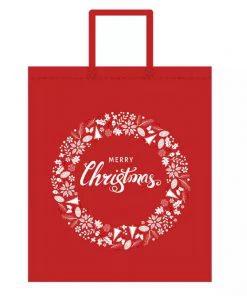
First, let’s clear up one common myth: you don’t have to settle for a boring, generic bag just because it’s laminated. But there are hard limits tied to how laminated bags are made, and most of them boil down to how the lamination process works, not some arbitrary rules we make up. Let’s start with the big one: color and design complexity.
When we print laminated bags, we usually do one of two things: print directly on the outer film before laminating it to the inner plastic layer, or print on a paper substrate then laminate over it. Either way, we use flexible printing techniques—mostly flexo or digital printing, depending on your order size. Flexo is great for bulk runs (10,000+ bags) because it’s fast and cheap, but it has a catch: each custom color you add means a new printing plate, and those plates cost extra. So if your design has 12 different hues, that’s 12 plates, which adds up way faster than a design with just 4 CMYK colors. Digital printing skips the plates, which is perfect for small runs (under 5,000 bags) or quick turns, but it has a smaller color gamut—you won’t get the exact neon pink or deep forest green you see in a Pantone swatch. We always tell clients: if your logo uses a unique Pantone color, we can match it, but for bulk flexo runs, it’s better to stick to 5 colors max to keep costs down and turnaround time short.
Another design restriction ties to bag size and shape. Laminated bags aren’t one-size-fits-all, and every shape has a print “safe zone” you can’t design outside of. For example, a standard flat laminated poly bag (the kind with side gussets for holding clothes or hardware) has a 1-inch margin along the top, bottom, and sides—printing in that margin will get cut off during sealing or trimming. Stand-up pouches (the ones that sit on store shelves) have even more limits: the top seal is thicker, so you can’t print text or logos right at the very top edge, and the bottom gusset folds inward, so designs there might get wrinkled or misaligned. We once had a client design a logo that went all the way to the bottom edge of a stand-up pouch, and when we tested production, every 10th bag had a tiny sliver of the logo cut off. It was an easy fix—we just moved the logo up 0.5 inches—but it taught us to flag safe zones early on, instead of fixing mistakes after design work is done.
Then there’s the stuff that has nothing to do with printing, but still ends up shaping your design: function. Laminated bags are used for everything from grocery takeout to shipping fragile goods, so your design has to work as hard as the bag itself. If you’re making food-safe laminated bags, for example, you can’t print something on the inner layer that will touch food. That means all designs have to be on the outer film, and we have to use inks that are FDA-approved for food contact—so no toxic or non-compatible inks, period. Another example: if your bag needs to be resealable or have a hang hole for retail display, those features add constraints. A hang hole means the area around the hole has to be flat and unprinted, because punching a hole through laminated material will pull ink and cause smudges if the design is too close. We once had a client who wanted a logo right where the hang hole would go, and we had to explain that the hole would tear the ink, making the logo look blurry—they ended up shifting the logo over, and it looked just as good without the mess.
Wait, but what about weird design requests? We’ve had clients ask for clear laminated bags with a holographic stripe, or matte laminated outer layers, or even embossed logos. Are there restrictions there? Mostly, it’s about what’s feasible, not impossible. Holographic or metallic laminates are totally doable, but they can alter how you see printed colors—so a white logo on a metallic silver laminate might look washed out, whereas a black logo would pop. Matte laminates avoid the shiny, plastic look of regular laminated bags, which is great for premium brands, but they’re more prone to smudging during printing, so you have to let them dry for a few extra hours after production. Embossing or debossing (stamping a raised or indented logo) is easy, but if the emboss is too deep, it can make the laminated material crack, especially if you’re using a thinner film for small orders. We usually cap emboss depth at 0.5mm for laminated bags to avoid that issue.
A lot of first-time clients also worry about registration—you know, when printed colors don’t line up perfectly, making a logo look blurry. Is that a restriction? Sort of, but it’s a tiny one. For high-quality flexo printing, registration is almost perfect, but for super small details (like a 1mm thick logo line), it’s hard to get every color to line up exactly. We always advise clients to make small design elements at least 2mm thick so they won’t have alignment issues. That’s not a hard rule, just a tip to keep your design looking sharp.
Now, let’s talk about the gray areas—stuff that’s not a “restriction” per se, but something we flag early to avoid headaches. For example, if you’re using a custom die cut for a weird bag shape (like a triangular bag for cookies, or a small pouch for lip balm), the die cut has to be made to order, which adds a small cost and 1-2 days of production time. It’s not a design restriction, but it’s a logistical thing that means your turnaround time will be a bit longer. Another gray area: ink durability. If you’re making bags that will be outdoors or come into contact with moisture (like gardening tool bags or beach product packaging), you can use water-based inks, but they’ll fade faster than UV-cured inks. UV-cured inks are more scratch-resistant and water-proof, but they cost a bit more. We never push one over the other, but we make sure clients know the tradeoff before they finalize their design.
Here’s the thing: most of the so-called “restrictions” on laminated bag design are just common sense if you’re working with someone who knows the process. We’ve seen designs go from “can I do this?” to “that’s perfect” dozens of times—all we ask is that you share your needs early, not just after you’ve spent hours on a design you can’t use. For example, if you tell us your order size, what the bag is for, and any non-negotiable design elements, we can give you a quick heads-up on what will work, and adjust small parts of the design if needed, instead of starting over later.
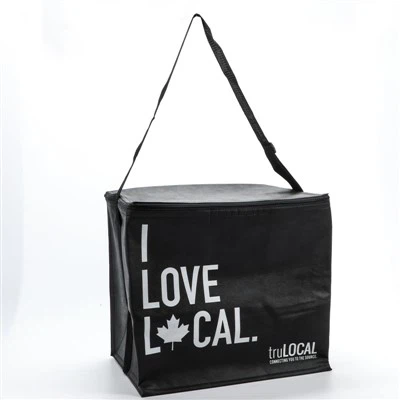
If you’re getting ready to design your next batch of printed laminated bags, don’t hold back on your ideas—just be upfront about what you need the bag to do, and we’ll help you make it work. Whether you’re a startup needing small, custom branded pouches or a large retailer ordering bulk takeout bags, we’ve got the process and the expertise to turn your design into a high-quality, functional bag. Reach out to our team to discuss your project details, and we’ll walk you through every step—no hidden fees, no confusing rules, just straight talk about what works for your brand.
Clothing Storage Bag References
- Flexible Packaging Association. (2022). Best Practices for Printing on Laminated Flexible Films. Retrieved from industry technical guidelines
- FDA. (2021). Guidance for Food Contact Substances: Printing Inks and Coatings. U.S. Food and Drug Administration
- Packaging Digest. (2023). Stand-Up Pouch Design Considerations for Branding and Function. Retrieved from packaging industry resources
Jiade (Wenzhou) Daily Necessities Co., Ltd.
As one of the most professional laminated bag manufacturers and suppliers in China, we’re featured by quality products and good price. Please rest assured to buy bulk discount laminated bag from our factory. We also accept customized orders.
Address: Building2,NO.1299,keji Road, Longgang City,Wenzhou City,Zhejiang Province,China.
E-mail: lhf@lianhaibag.com
WebSite: https://www.jiadebag.com/
