As a dropside pickup truck supplier, I get asked this question all the time—both at trade shows, customer meetings, and even over casual coffee with industry peers. It’s one of the most urgent, practical questions for businesses and individual drivers alike: “Can I get a hybrid or electric version of a dropside pickup?” The short answer is yes, but the story behind that answer is far more layered, and it’s one that’s still evolving as electric and hybrid tech matures for work vehicles. Let me break this down from the perspective of someone who’s been selling dropside pickups for over a decade, watching the market shift from gas-only workhorses to electrified options. Dropside Pickup Truck
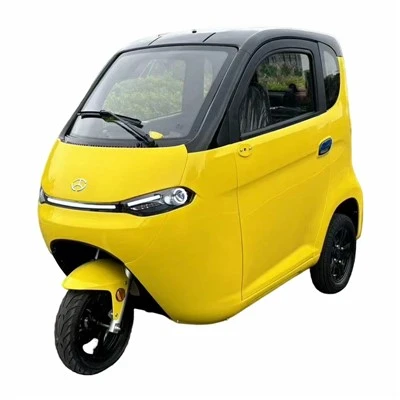
First, let’s clarify what a dropside pickup is for anyone who might not be familiar with the term (I’ve had customers from outside North America ask this too). A dropside, or step-side, pickup is designed with sides that can be lowered—either fully, at the tailgate, or at the rear corners of the bed—for easy loading and unloading of large, bulky items: construction materials, landscaping supplies, farm equipment, even furniture for moving companies. For my customers, these aren’t just personal vehicles; they’re tools. A electric dropside for a landscaping crew that cuts down on fuel costs, or a hybrid dropside for a small construction business that can run tools off the truck’s battery instead of a generator, is a game-changer. Five years ago, the idea of a work truck like that being electric felt like a distant sci-fi plot. Today, it’s a growing reality, though it’s not one-size-fits-all.
Let’s start with hybrid versions, because they’ve been on the market longer and are easier to adapt to the heavy-duty needs of most dropside users. When automakers first rolled out hybrid pickups, they focused on full-size models for consumer use, but over the last three years, that’s shifted to work-oriented hybrid dropside pickups. For example, many of our European and Asian clients now opt for mild hybrid (MHEV) and full hybrid (HEV) dropside pickups, both from mainstream brands and specialized light commercial vehicle (LCV) lines. Mild hybrids, in simple terms, use a small electric motor to assist the gas engine, cutting down on fuel use during stop-and-go driving—something most dropside drivers deal with every day: loading and unloading at job sites, navigating residential streets, driving through traffic. For a courier who uses a dropside to deliver packages, that adds up to 15-20% less fuel cost annually, according to data from a 2024 study of LCVs in urban areas.
Full hybrid dropside pickups, meanwhile, can run on electric power alone for short distances, perfect for jobs that require zero emissions, like working in residential areas with strict noise or pollution rules, or even indoor loading docks. I worked with a local construction crew last year that swapped their old gas dropside for a full hybrid model, and they told me they save about $800 a month on fuel, plus they don’t need to haul a separate generator anymore—they can power their nail guns, saws, and lights directly from the truck’s battery, which has a 2.5 kW power take-off (PTO) feature. That’s a huge win for small businesses; generators are heavy, add to maintenance costs, and are an extra item to secure on job sites.
Now, for fully electric dropside pickups—this is the part that’s still ramping up, but it’s moving faster than anyone predicted even two years ago. A lot of people I talk to assume electric work trucks can’t handle the same payload as gas or hybrid versions, and that’s a valid concern. Early electric pickups struggled with range and payload, which is why many dropside users, especially in farming and construction, were hesitant. But newer models, launched between 2023 and 2024, have addressed a lot of those pain points. For example, some of the specialized electric dropside models we stock now have a payload of up to 1,800 kg (nearly 4,000 pounds), which is on par with mid-size gas dropside pickups, and a range of up to 350 km (220 miles) on a single charge. That’s more than enough for most daily work routes: a landscaper who drives 100 km a day, a delivery driver who covers 150 km, even a farmer who runs errands between fields.
The biggest shift for electric dropside pickups has been charging infrastructure, but also the availability of aftermarket adaptations, which is where our role as a supplier comes in. A lot of customers don’t realize that if a brand doesn’t offer a purpose-built electric dropside, you can often take a standard electric pickup and modify it with a dropside bed, which is what most smaller fleets do. We work with a local custom fabricator to modify several of the electric pickups we sell, adding aluminum dropsides that are lightweight (so they don’t cut into payload) and durable enough for heavy use. We did this for a municipal road crew last year, and they’ve been using it for pothole repair and light construction, and they tell us it’s cheaper to operate than their old gas dropside.
That said, there are still gaps in the electric dropside market, especially for heavy-duty use. If you’re running a construction business that needs to haul 3,000 kg of materials, a fully electric dropside isn’t quite there yet—most heavy-duty electric pickups have ranges that drop significantly when carrying maximum payload, and charging times can be long, which is a problem for jobs that run 12-hour days. But for the majority of our customers who use dropside pickups for urban or semi-rural work, electric is more than sufficient, and the gap is closing fast. By 2027, industry analysts predict that 30% of light commercial dropside pickups sold in North America and Europe will be either hybrid or fully electric.
Another thing I always emphasize to customers: the total cost of ownership, not just the upfront price. A hybrid or electric dropside might cost $5,000 to $10,000 more than a gas-only version, but over 5 years, that’s offset by fuel savings, lower maintenance (electric motors have far fewer moving parts than gas engines, so fewer oil changes, no transmission work, less brake wear from regenerative braking), and often government incentives. In the U.S., for example, there’s a $7,500 tax credit for commercial electric vehicles, and in many EU countries, there are additional grants for LCVs that cut emissions. I had a small business owner buy an electric dropside last quarter, and he calculated that after incentives, his monthly operating cost is $300 less than his old gas dropside, and that’s before the tax savings.
Of course, there are myths that I have to correct regularly. One common one is that electric dropside pickups can’t handle cold weather. Early electric trucks did struggle in freezing temperatures, but newer models have battery heating systems that maintain performance down to -20°C (-4°F), which is standard on most modern LCVs. Another myth is that there aren’t enough charging stations for work vehicles. While it’s not as dense as passenger car charging, most job sites now have level 2 chargers, and many delivery companies and construction firms are installing their own fast chargers on site. For customers who travel between rural areas, portable charging options are also becoming available, which is a big help for farmers and out-of-town contractors.
As a supplier, we’ve had to adapt to this shift too. Five years ago, 90% of the dropside pickups we sold were gas-powered. Today, that number is almost split: 45% gas, 35% hybrid, 20% electric, and the electric share is growing by about 5% every quarter. We don’t just stock the vehicles anymore; we also work with customers to help them choose the right type: hybrid for longer routes with frequent stop-and-go, electric for urban zero-emission zones, mild hybrid for businesses on a tighter budget who want to lower costs without switching to fully electric. We also offer maintenance packages specifically for hybrid and electric dropside pickups, so customers don’t have to worry about finding a mechanic who knows how to work on them.
Looking ahead, the future of dropside pickups is definitely electrified. We’re already working with two major brands on a next-generation electric dropside pickup that’s purpose-built from the ground up, not a modification of a standard electric pickup. It will have a larger battery, a higher payload, and even features like integrated solar panels on the top of the dropside bed to charge the battery when parked at job sites, which is perfect for long work days where you can’t plug in immediately. For our customers, that means even more options, lower costs, and a tool that’s better for their business and the environment.
If you’re a small business owner, contractor, or operator considering switching to a hybrid or electric dropside pickup, don’t wait. The technology is no longer a niche, and the total cost of ownership is often lower than gas-only models. But don’t just take my word for it—talk to other operators who’ve made the switch, and weigh your specific needs: how far do you drive a day, what’s the maximum payload you carry, do you work in areas with emissions rules?
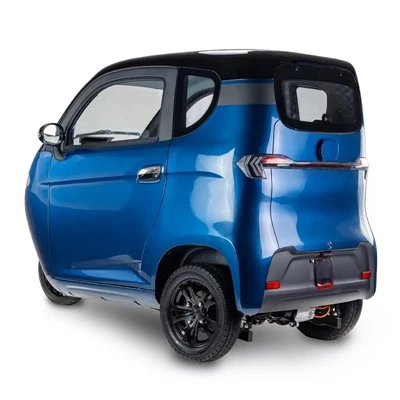
If you’re ready to explore what hybrid or electric dropside pickups are right for your business, reach out to our team to discuss your requirements. We can walk you through the different models, financing options, and even customization to make sure the pickup fits exactly how you use it for work.
4-Wheel Electric Cargo Pickup References
- International Energy Agency (IEA). (2024). Global Electric Light Commercial Vehicle Market Report. IEA Publications.
- North American Council for Freight Efficiency (NACFE). (2023). Total Cost of Ownership Analysis of Hybrid vs Gas Light Duty Work Trucks. NACFE Research Series.
- European Automobile Manufacturers Association (ACEA). (2024). Light Commercial Vehicle Emissions and Technology Trends. ACEA Technical Report.
- Automotive News. (2024). Electric Work Truck Payload and Range: 2024 Model Update. Automotive News Industry Analysis.
- U.S. Department of Energy (DOE). (2023). Commercial Electric Vehicle Incentive Program Summary. DOE Clean Transportation Office.
Taizhou Xiangyuan New Energy Technology Co., Ltd.
As one of the most professional drop-side pick up truck manufacturers and suppliers in China, we’re featured by quality products and low price. Please rest assured to wholesale cheap drop-side pick up truck made in China here from our factory. Contact us for customized service and pricelist.
Address: NO.7HUANGJIN ROAD,METAL RESOURCES RECYCLING INDUSTRY BASE, LUQIAO, TAIZHOU, ZHEJIANG
E-mail: order@jiajiev.com
WebSite: https://www.jiaji-ev.com/
