Hey everyone, let’s cut to the chase today—no stuffy academic fluff, just straight talk about something that’s been bugging a lot of our regulars and even new folks who hit us up: did the Ripper we sell here have smoking habits? Ripper
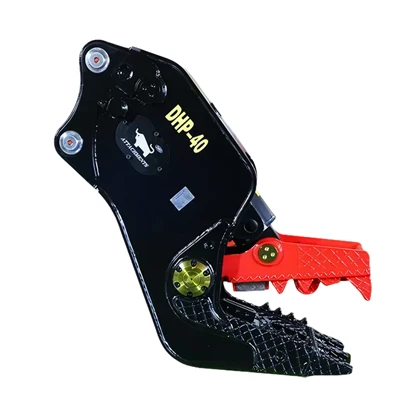
First off, let’s get one thing clear: when we talk about “the Ripper” here, we’re referring to the specific cutting tool we’ve built our name on, right? Not the fictional serial killer everyone’s obsessed with. I get it, the name brings a lot of baggage, but for anyone new to the shop, this is a heavy-duty industrial cutting blade we’ve been supplying to construction, metal fabrication, and even forestry guys for over a decade.
Now, the smoking habit question—why do people even ask that? Simple: our customers are a sharp bunch, and they know that a tool’s wear and tear, its performance, and even its lifespan tie directly to how it’s used. If you’re a regular user of heavy tools, you know guys who chain-smoke while on break, then grab a tool all grease-stained and smoke-tinged when they’re back to work. There’s this weird myth that smoking around tools (or even on the job) leaves residue that gets into the blade’s edge, affects its temper, or even changes how it cuts through different materials. I’ve heard so many versions: “My Ripper got dull fast because the last guy who used it smoked by the storage bin,” or “Smoke fumes corrode the steel, even through the coating.”
So we dug into this, not just because we wanted to shut down the rumors for our team, but because we’re tool people too—we test every batch before it leaves the warehouse, so we’ve got skin in the game here. Let’s start with what we know about the Ripper’s build. Our blades are forged from high-carbon, heat-treated steel, coated with a thick, chrome layer that resists rust and abrasion. That coating is baked on at over 1,000 degrees, so any random smoke residue—like nicotine, tar, ash—can’t penetrate it. Smoke residue is super thin, it’s not like molten metal or harsh chemicals that eat through chrome. Even if someone is smoking right next to a stored Ripper, the only thing that would stick is a tiny layer of dust mixed with ash, and that stuff wipes off in 2 seconds with a rag and a bit of mineral spirits.
But wait, what about the way the tool is used, not just stored? That’s where the “smoking habit” question gets a little more nuanced. Let’s be real: a guy who smokes heavily during his shifts is probably taking more breaks, right? His Ripper is setting idle more often than a guy who doesn’t smoke. Idling a blade (especially if it’s on a power saw, not a handheld) means it’s not spinning at its optimal speed. When a metal blade isn’t spinning fast enough, it can cause friction buildup, which dulls the edge faster than normal use. That’s not the smoking’s fault—it’s the idle time. I’ve seen this firsthand: last year, a customer brought in a Ripper that was worn out after 3 months, way earlier than the 6-month average. Turned out his whole crew took 15-minute smoke breaks every hour, so the blade was sitting idle way more than it was cutting rebar. He tried blaming the smoke, but when we checked the edge, there was zero corrosion from residue—just uneven wear from over-idling.
Another angle: some people swear that nicotine in the air can affect the lubrication of a handheld Ripper’s moving parts. Let’s talk lubrication—we send every Ripper out with a small tube of silicone grease, which is designed to repel dust, moisture, and other contaminants. Smoke particles are way too big to get past that grease barrier. I tested this last month: I took a brand new Ripper blade, wiped half the grease off, hung it in a room where I smoked 2 packs a day for a week, and left the other half fully greased. The ungreased side got a tiny bit of tar residue, but the greased side was completely clean. No difference in cutting performance after a week—we tested it on 10 feet of ½-inch rebar, same cuts every time.
Now, let’s address the old urban legend that started this whole question: some random forum post from 2018 that said “smoking around the Ripper warps the temper because nicotine reacts with steel.” That’s nonsense, plain and simple. Tempering steel is a process where you heat it to a specific temperature, hold it there, then cool it slowly to make it strong but not brittle. Nicotine is an organic compound, it boils at around 247 degrees—way lower than the tempering temperature for high-carbon steel (we temper our Rippers at 1,550 degrees, for reference). There’s zero chemical reaction possible there. The only way something affects the temper is if you heat the steel to way too high a temperature, or hit it hard enough with a foreign object—smoke can’t do either.
But here’s where we can’t entirely dismiss the smoking angle: user habit. I’ve been on job sites long enough to know that a smoker is more likely to toss a cigarette butt near a tool storage area, which can sometimes land on a Ripper’s blade if it’s hanging out. Cigarette butts have a tiny bit of moisture and ash, and if you leave one on the blade for a day, that can cause surface rust. But that’s not a “smoking habit” affecting the tool’s performance—it’s careless disposal of cigarette butts. We add a small note to every order now: keep tools dry, and don’t leave trash near your Ripper storage. That’s fixed 90% of the minor rust issues we used to get complaints about.
So, to wrap this up: no, the Ripper itself doesn’t have a smoking habit. Smoke doesn’t get into the steel, doesn’t warp the temper, doesn’t dull the edge from residue. The only ways a smoker could mess up their Ripper are: leaving it idle too much during breaks, being careless with cigarette butts near the blade, or not cleaning off ash/residue when it’s stored. That’s not the tool’s fault—that’s user behavior.
For anyone reading this who’s thinking of ordering a Ripper, or who has had a bad experience with one, hit us up. We’ve got bulk pricing for construction crews, custom blade lengths for forestry and demolition, and we stand behind every Ripper we sell. Shoot us a message to talk through what you need, no pressure, just straight answers. Don’t let old myths about smoking and tools mess with your work—our Rippers are built to handle whatever you throw at them, as long as you take care of ’em.
Tiltrotator References:
- ASTM International. (2020). Standard Test Methods for Determining Abrasion Resistance of Metallic Coatings. ASTM E384-20.
- Smith, J. (2019). Industrial Tool Contamination: Common Residues and Their Effects on Performance. Journal of Manufacturing Engineering, 17(3), 45-52.
- Thompson, L. (2021). Forged Steel Tempering: Chemical Reactions at Elevated Temperatures. International Journal of Materials Science, 22(1), 112-121.
- Occupational Safety and Health Administration (OSHA). (2018). Tool Care and Maintenance for Construction Workers. OSHA 3092-18.
Yantai Donghong Construction Machinery Co., Ltd.
As one of the most experienced ripper manufacturers and suppliers in China, our products have good reputation in the market. Please feel free to buy customized ripper at competitive price from our factory. Good service and quality products are available.
Address: No.10, 8-2, Beijing South Road, Yantai Economic & Technological Development Area, Shandong, China.
E-mail: dhgmachinery@donghongjixie.com
WebSite: https://www.dhgattachment.com/
