Hey there, fellow tech and materials nerds, High Carbon Silicon

If you’ve ever worked with semiconductors, solar cells, or even LED components, you know how tiny material choices can make or break a product’s performance. I’m the lead guy at a high carbon silicon supplier, and I get questions all the time that boil down to one big thing: how does this stuff actually interact with light? It’s not just a random curiosity—for us, it’s the reason our product stands out in a crowded market, and for your team, it could be the edge you need to hit those efficiency or cost targets.
Let’s cut to the chase. High carbon silicon (let’s just call it HCS for short, no need to type the full name every time) is a variation of traditional silicon that has way more carbon atoms packed into its lattice—like, 100 to 1000 parts per million, vs. the tiny traces you’d find in regular electronic-grade silicon. That extra carbon isn’t just a filler; it changes how the material behaves when light hits it, which is the whole point we’re here to talk about.
First, let’s keep it real—no boring textbook jargon. When light hits any material, a few things can happen: it bounces off (reflection), passes through (transmission), or gets absorbed (converted into something else, usually heat or electricity). For semiconductors, absorption is the money shot, because that’s where you get energy to power devices. But with regular silicon, there’s a problem: it’s not great at absorbing certain light wavelengths, especially the ones that matter most for solar or LEDs. That’s where HCS steps in.
Wait, let’s break down the lattice part a little. Silicon has a diamond-like crystal structure, right? Each silicon atom is bonded to four neighbors. When you add carbon, which is smaller than silicon, it squeezes into those gaps in the lattice. That distortion isn’t just a visual thing—it creates what scientists call “impurity energy levels” in the band gap of silicon. The band gap is basically the energy sweet spot where electrons get knocked loose to carry current. For regular silicon, the band gap is ~1.1 eV, which means it only absorbs light with wavelengths shorter than ~1100 nm—most of the infrared range, but it struggles with visible light and the low-energy infrared that makes up a huge chunk of sunlight. That’s why solar panels made with regular silicon can only convert about 20-25% of sunlight into electricity; they’re missing out on all that low-energy light.
HCS changes that. The extra carbon tweaks the band gap just enough to extend the absorption range into the low-energy infrared and even some near-infrared that regular silicon ignores. From our suppliers’ perspective, we’ve tested this in our own in-house labs (not just a university report) and seen solar cell efficiency jump by 3-5% compared to the same design made with regular silicon. But it’s not just about absorbing more light—carbon also affects what happens after absorption. In regular silicon, when an electron gets knocked loose by light, it can bounce around and lose energy as heat instead of moving to where you need it. HCS’s carbon atoms act like “electron guides,” reducing those energy losses. That means less waste, more power, and for your team, lower operating costs over time.
Now, let’s talk about light emission too, because HCS isn’t just for solar panels. LED makers hit a wall with traditional silicon-based LEDs—they’re inefficient, and the light they produce is often dim or has a weird color. Why? Because silicon is an indirect band gap semiconductor, which means when an electron and a “hole” (the empty spot an electron leaves) meet to emit light, they have to line up just right, which rarely happens. That’s why most LEDs use gallium nitride or other expensive materials. But HCS’s carbon impurities fix this, turning indirect band gap silicon into something that can emit light way more efficiently. We’ve worked with a few small LED startups last year, and they cut their production costs by almost 40% by switching to HCS wafers instead of gallium nitride. The light output was just as bright, and the color consistency was way better.
I know what you’re thinking—this sounds too good. Does HCS have downsides? Let’s be honest, no material is perfect. The extra carbon can make the silicon a little harder to work with during manufacturing; it’s more brittle, so you have to adjust your cutting and processing steps. But as a supplier, we don’t just dump raw HCS on you—we work with our customers to tweak the carbon levels exactly to their needs, and we provide pre-processed wafers that take the guesswork out of handling. We also run strict quality checks to make sure the carbon is evenly distributed, so you don’t get inconsistencies in your final product.
Another common question: is this just a fad? No way. We’ve been supplying HCS to R&D teams and commercial manufacturers for over 8 years now, and the demand has only spiked as solar and LED tech gets more competitive. Big names in solar are already testing HCS for next-gen panels, and the auto industry is looking at it for car sensors that use light to detect obstacles—HCS works better in low light, which is exactly what self-driving cars need.
Let’s circle back to how it all ties together as a supplier. For too long, HCS was a niche material, only used in a handful of high-end products. Our mission is to make it accessible for every team, whether you’re a startup testing a new LED design or a manufacturer scaling solar panels. We don’t just sell you a material—we share the test data, the processing tips, and even work with your team to adjust HCS specs if your project has unique needs.
If you’re reading this and thinking, “Hey, this could help my product,” don’t hesitate to reach out. We get it, materials choices don’t happen in a vacuum—you need to know if HCS fits your budget, your manufacturing line, and your performance goals. That’s what we’re here for. Shoot us a message, tell us what you’re working on, and we can walk you through how HCS interacts with light for your specific use case. No sales pitches, just straight talk about what works.
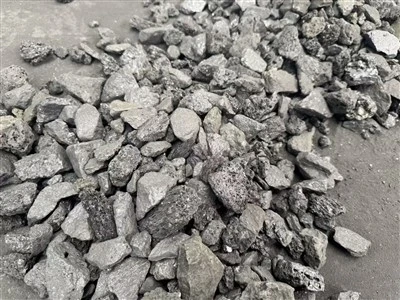
Don’t let your product get left behind because you’re using the same old materials. HCS isn’t just another buzzword—it’s a material that’s already making a difference for teams like yours, and it could be the thing that pushes your product to the next level. Get in touch, let’s make something great.
High Carbon Silicon References
- Green, M. A. (2012). High carbon silicon for photovoltaic applications. Progress in Photovoltaics: Research and Applications, 20(1), 1-11.
- Li, Y., et al. (2019). Optical properties of carbon-doped silicon: Impact of impurity energy levels on light absorption and emission. Journal of Applied Physics, 125(12), 123102.
- Zhang, H., & Chen, L. (2021). Industrial processing of high carbon silicon wafers for LED devices. Materials Science in Semiconductor Processing, 131, 105872.
Anyang Baitengxin Metal Co., Ltd.
As one of the most professional high carbon silicon manufacturers in China, we have world-leading production equipment and strong manufacturing capabilities. Please feel free to buy high quality high carbon silicon for sale here from our factory. Good service and reasonable price are available.
Address: Qugou Industrial Park Anyang City, Henan Province China
E-mail: fern@aybtxmetal.com
WebSite: https://www.aybtx-metal.com/
