Hey everyone, thanks for swinging by my corner of the tool blog. I’m Jake, and if you’ve been around grinding and sanding gear for any length of time, you’ve probably come across flap discs before. As someone who’s been supplying these bad boys to woodworkers, metal fabricators, and everyone in between for the last 7 years, one question pops up way more than you’d think: “Can a flap disc even be used on wood?” Flap Disc
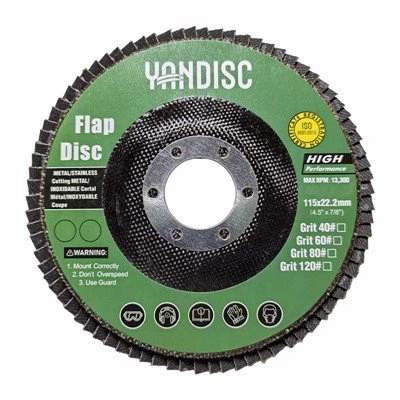
Let me cut to the chase here—yes, they absolutely can. But there’s a whole lot more to it than just grabbing a random flap disc off the shelf and slapping it on your angle grinder. I see so many folks make that mistake, and honestly? It’s why some of them end up writing off flap discs for wood entirely. Let’s break this down like I’d explain it to a buddy who’s never touched one before, no stuffy jargon, just real talk from someone who’s got the stock and the scars to prove it.
First, let’s remember what a flap disc actually is. If you’re new to the party, a flap disc is a round grinding wheel made of overlapping “flaps” of abrasive material glued to a fiberglass backing. Unlike a regular sanding disc that’s just a sheet of paper or cloth stuck to a plate, the flaps are angled—usually 15 or 25 degrees from the disc face—and they flex a little as they spin. That flexibility is key, especially for wood, because it lets you contour around curves without digging in too hard.
Now, why would you even use a flap disc on wood instead of your orbital sander or random-orbit sander? Good question. Let’s list the real uses, not the made-up ones you might see on sketchy YouTube tutorials. If you’ve got a thick piece of lumber that needs removing a lot of material fast—like trimming down a oak beam that’s an inch too long for your project, or cleaning up the rough edges from a band saw cut on a pine plank—flap discs are way faster than sanding by hand or even with an orbital sander. They’re also perfect for shaping edges: rounding over a table leg, tapering a bench seat, or getting that smooth, curved profile on a rocking chair arm. Another big one? Removing old finish, paint, or rust from wood surfaces before refinishing—way more efficient than a wire wheel, which I’ve seen leave way too many deep gouges.
But here’s where most people mess up: picking the wrong flap disc for wood. If you grab a standard 36-grit flap disc that’s made for grinding metal? That’s a disaster. Those discs use super aggressive abrasives—usually aluminum oxide or zirconia alumina—and they’re designed to chew through steel, not soft or porous wood. Put that on a piece of pine, and it’ll dig in, leave scratch marks that are almost impossible to sand out, and even burn the wood if you hold it too long in one spot. Trust me, I’ve had customers come back with those exact horror stories, and 9 times out of 10, they just grabbed the first flap disc they saw for metal.
So what do you need to look for in a wood-specific flap disc? First, grit size. For most wood jobs, you want to start with a medium grit—60 or 80. That’s aggressive enough to remove material fast but not so coarse that it leaves deep scratches. If you’re just finishing up a shape and need a smooth surface, you can go up to 120 or even 180 grit, but don’t skip the coarser step first. Second, abrasive material. For wood, I recommend aluminum oxide over zirconia—zirconia is way too hard for most wood, and it’s more likely to cause those burn marks. Aluminum oxide is a little softer, so it cuts through wood evenly without tearing the grain. Third, backing. For wood, you want a flexible fiberglass backing, not a rigid steel or thick fiberglass one. The flexibility helps you control the pressure and follow the wood’s shape, which is huge for avoid digging in.
Wait, let’s talk about that burn mark thing because it’s such a common complaint. I get emails every month from people saying their flap disc turned their beautiful walnut plank black. That’s almost always two things: either a wrong grit (too aggressive), or holding the disc in one spot too long, or running your angle grinder too fast. Speaking of speed—don’t run your angle grinder at full tilt when using a flap disc on wood. Most angle grinders run between 8,000 and 12,000 RPM, but for wood, you want to drop it down to around 6,000 to 8,000 RPM. Slower speed means less heat, which means fewer burn marks. I always tell customers to test the speed on a scrap piece of the same wood they’re using—if it’s still burning, slow it down more.
Another pro tip: always move the disc in a consistent, side-to-side motion, not back and forth like you’re sanding by hand. Back and forth can cause uneven wear on the flaps and leave those annoying cross-grain scratch marks. Keep the disc moving steadily, and use light pressure—you don’t need to push hard. The weight of the angle grinder alone is usually enough to do the work. Pushing too hard will just make the disc dig in, burn the wood, and wear out the flaps way faster.
Let me share a quick story to make this real. A guy came into my shop last year, panicking, because he’d just ruined a $500 live-edge cedar slab he was turning into a dining table. He’d used a 36-grit metal flap disc to trim the rough edge, and it had left deep gouges and burn marks all along the live edge. I handed him a 60-grit flexible aluminum oxide flap disc, put it on his angle grinder, and showed him how to keep it moving and use light pressure. In 20 minutes, he had that edge smooth as can be, no burns, no gouges, and he finished the table last month. He still sends me pictures of it, which is the best part of this job.
Now, are there any wood types where flap discs work better than others? Definitely. Softwoods like pine, cedar, and fir are easy to work with, but you still need to watch the grit. Hardwoods like oak, walnut, and maple can be a little trickier because they’re denser—you might need to start with 60 grit instead of 80, and make sure your speed isn’t too high. Even exotic woods like teak or mahogany? Same rules apply, just maybe a little slower speed to prevent burning.
Wait, what about common myths I hear? Some people say flap discs are too aggressive for wood, that you’ll never get a smooth finish. That’s only true if you use the wrong disc. If you start with 60 grit, then move to 120, then 180, you can get a finish that’s almost as smooth as an orbital sander. I’ve even used 180-grit flap discs to prep wood for staining—just make sure you wipe off all the dust before staining, obviously. Another myth: you can’t use flap discs on curved wood. No, the flexible backing lets you follow curves perfectly— I used a 80-grit flap disc to shape the rails of a rocking chair last month, and the curves came out way smoother than if I’d used a rasp.
Now, let’s talk about maintenance, because that’s something a lot of people overlook. Flap discs on wood will get clogged with sawdust, right? That’s called loading, and it’s a big problem. If your disc is loading up with sawdust, it won’t cut anymore, it’ll just push against the wood and cause burns. How to fix that? Every 5 or 10 minutes of use, take a wire brush (a stiff one, not too soft) and brush the flaps to knock out the sawdust. Some people also use a little compressed air, but a wire brush works just as good if you don’t have an air compressor. Don’t wait until the disc is totally loaded—maintaining it mid-use will make it last way longer and work better.
What about safety? Can’t forget that. Even though you’re using it on wood, a flap disc spinning fast at high RPM is still dangerous. Always wear eye protection, obviously—sawdust and small abrasive particles can fly everywhere. Wear a dust mask too, because wood dust isn’t great for your lungs. Gloves? I usually recommend gloves, but be careful not to let the glove get caught in the disc—keep them tight and avoid loose fabric. And always make sure your angle grinder is set up for flap discs—use the correct size flange, and don’t overtighten the nut, because that can crack the fiberglass backing.
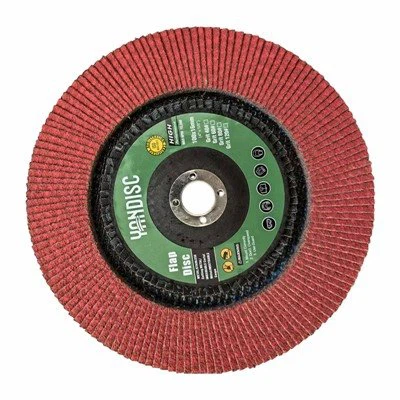
So, to circle back to the original question: Can a flap disc be used on wood? Absolutely. But it’s all about getting the right disc for the job, using the right speed and pressure, and maintaining your disc. It’s not a one-size-fits-all tool, and if you skip the basics, you’ll end up with a bad experience.
Aluminum Oxide Flap Disc If you’re a woodworker who’s been hesitant to try flap discs, or if you’ve had a bad experience with one in the past, hit me up. I’ve got a whole line of wood-specific flap discs that I’ve tested with all kinds of lumber, and I can help you pick the right one for your project. No pushy sales stuff, just real advice from someone who’s been in the shop and the supply game for years. Whether you need a few discs for a small project or a bulk order for your woodworking shop, I’m here to help you get the right gear without the hassle. Don’t guess—reach out and let’s figure out what works for your next build.
References
- Woodworking Network. (2022). "Abrasives for Woodworking: Choosing the Right Tool for the Job".
- Midwest Tool & Abrasives. (2021). "Flap Discs: Applications for Wood and Metal".
- Fine Woodworking. (2020). "Tips for Using Power Tools on Wood: Avoid Burn Marks and Gouges".
Henan Yandisc Hardware Tools Co., Ltd.
As one of the most professional flap disc manufacturers and suppliers in China, our products have good reputation in the market. Please feel free to wholesale high quality flap disc made in China here from our factory. Customized orders are welcome.
Address: Zinan Road, High-tech Industrial Development Zone, Zhengzhou, Henan, China
E-mail: info@yandisc.com
WebSite: https://www.yandisc.com/
