Hey there, I’m Jake, and I’ve been working as a PP blister cup supplier for over a decade now. If you’ve ever reached for a takeout salad, a portion of yogurt, or a pre-portioned nut pack, chances are you’ve handled one of the cups my team and I manufacture. For years, one of the most common questions I get from new customers—whether they’re running a small café chain, a frozen food distributor, or a catering company— is, “What’s the maximum temperature these PP blister cups can actually handle?” It’s a fair question, too, because choosing the right packaging that can hold up to your product’s unique temperature needs isn’t just about convenience; it’s about keeping food safe, avoiding messy spills, and making sure your customers don’t get a surprise (like a melted cup when they pull it out of a hot microwave). Pp Blister Cup

Let’s start with the basics, because there’s a lot of misinformation floating around about PP (polypropylene) plastic. A lot of people lump all plastics together, saying “they all melt at the same temperature” or “they can’t handle heat.” But PP is different—way different from, say, the flimsy polystyrene (aka #6 plastic) that makes up those cheap takeout containers that curl up and release a weird smell when you microwave them. PP is actually one of the most heat-resistant common food-safe plastics we use for packaging, and that’s a big reason why it’s such a go-to for blister cups.
Now, the maximum temperature PP blister cups can handle isn’t a random number we pull out of thin air. It comes down to two key factors: the type of PP resin we use to make the cups, and the manufacturing process we follow to turn that resin into a usable, durable cup. As a supplier, I can tell you that we only work with food-grade PP resin, specifically the type marked as #5 plastic (that little recycling symbol on the bottom of your cup). Food-grade #5 PP is formulated to meet FDA and EU food safety standards, which means it’s non-toxic even when exposed to heat—something that matters a lot more than just how hot it gets.
So, what’s the actual number here? Let’s get specific. On average, standard PP blister cups can handle continuous temperatures of up to 220°F (104°C) and short-term exposure (think a few minutes) to temperatures as high as 250°F (121°C). Wait, let me clarify that “short-term” part—because that’s where a lot of customers mix up their needs. If you’re keeping a cup of hot coffee at 180°F for an hour, that’s well within the continuous range, no problem. If you pop a cup with lasagna leftovers into the microwave for 2 minutes to reheat, that 212°F (boiling water) or so is totally fine too. But if you’re putting a PP blister cup into a deep fryer, or leaving it in a 300°F oven for 10 minutes straight? That’s when you’ll start to see issues.
But here’s the thing: that 250°F short-term number isn’t universal. Some of my customers are in industries that need even more heat resistance—like companies that package hot sauces that are pasteurized at higher temperatures, or frozen food brands that need their cups to hold up to blast freezing first, then handle hot sauces that get poured right on top. For those cases, we can use high-heat PP resin, which can handle short-term exposure up to 275°F (135°C) and continuous temperatures up to 230°F (110°C). The tradeoff? High-heat PP is a little stiffer than standard PP, so it works best for cups that don’t need to be super flexible—like the ones we use for hot soup or ready-to-eat pasta meals.
Now, why does this temperature range matter so much for a blister cup specifically, not just PP in general? Blister cups aren’t injection-molded containers; they’re made through a process called thermoforming, where we heat a flat sheet of PP until it’s pliable, then suck it into a mold to form the cup shape. The way we heat the sheet during thermoforming affects the final product’s heat resistance, too. If we don’t heat the PP sheet evenly, or if we use too high a temperature during molding, the final cup might have weak spots that warp or melt at lower temperatures than the rated maximum. That’s why as a supplier, we test every batch of our blister cups. We don’t just take the resin’s temperature specs—we run real-world tests: we put cups in commercial microwaves, we fill them with boiling water and leave them for 15 minutes, we put them in industrial ovens set to 260°F for 5 minutes. If a batch fails, we send it back, no exceptions. I’ve seen too many suppliers cut corners on thermoforming to save money, and the result is a cup that leaks when you’re serving hot chili, or melts when a customer reheats their leftovers. It’s not worth it, and neither is risking your product’s reputation.
Let’s talk about the common myths I hear all the time, too. One big one is that PP blister cups can go straight from the freezer to the microwave. Wait—can they? Well, PP is great at freezing too, with a minimum temperature rating of around -40°F (-40°C), so it can handle being in a deep freezer for months. But here’s the catch: rapid temperature changes. If you take a cold cup straight from a 0°F freezer and put it in a microwave set to high, the sudden shift from freezing to 200°F+ can cause the cup to crack or warp, even if both temperatures are within its rated range. It’s like when you pour boiling water into a cold glass and it shatters—thermal shock. The fix is simple: if you’re reheating something from a PP blister cup, let it sit on the counter for 2-3 minutes to warm up a little first, or take the lid off (lids are usually a different plastic, by the way—often polyethylene, which has lower heat resistance) if you’re popping it in the microwave. That small step makes a huge difference in how the cup performs.
Another myth: all PP blister cups are the same, so the temperature rating is interchangeable across suppliers. That couldn’t be further from the truth. I had a customer come to me last year who’d had a bad experience with a competitor’s PP cups: they were using them to package hot tamales, and the cups started leaking after 10 minutes on a steam table. When I tested those competitor’s cups, I found they were made with recycled PP resin that was contaminated with polystyrene—something that made them soften at just 180°F, way below the standard PP rating. Recycled PP is great for some applications, but if it’s not properly purified, it can mess with the heat resistance. That’s why we only use 100% virgin food-grade PP for our blister cups. It’s a little more expensive upfront, but it means every cup leaves our facility with a consistent, reliable temperature rating.
Now, let’s tie this back to what this means for your business, because at the end of the day, that’s why you’re reading this. If you’re a small bakery packaging hot cross buns to sell at a farmers’ market, a standard PP blister cup is perfect—they’ll hold the buns at 190°F (the temperature right after they come out of the oven) without warping, and you can let customers reheat them in their home microwaves safely. If you’re a catering company that’s serving hot entrees at a buffet, you might want to opt for our high-heat PP cups, which can sit on a steam table set to 220°F for hours without leaking or deforming. If you’re a meal kit company that sends pre-portioned soups and sides that customers reheat in the microwave, our standard cups work perfectly, as long as you remind them to let the cup warm up a little before microwaving (or tell them to transfer to a microwave-safe container if they’re in a hurry).
I also want to mention what PP blister cups are not designed for. They’re not meant for long-term holding of temperatures above 250°F, so don’t use them to cook food in (like putting a cup of raw pasta sauce in a 350°F oven to cook it—use a ceramic or glass dish for that). They’re also not dishwasher-safe for high-heat cycles (most dishwashers go up to 140-170°F, which is fine, but repeated exposure to the top rack’s heating element can break down the PP over time, lowering its heat resistance). That’s all about using the right tool for the job, which is what packaging is all about.
As a supplier, my job isn’t just to sell you a box of blister cups—it’s to make sure you have the right cups for your specific needs, so you don’t have to deal with wasted product, unhappy customers, or safety issues. I’ve worked with cafes, food distributors, and meal kit services, and I always ask questions before I recommend anything: what temperature is your product right after it’s filled? How long will the cup be in contact with that heat? Will your customers be reheating it? Answering those questions helps me point you to the right PP cup, whether it’s our standard 220°F continuous cup or our high-heat 230°F continuous cup.
Let me wrap this up with a quick recap, because I know there’s a lot of numbers thrown around here. The maximum temperature standard PP blister cups can handle is 220°F continuous, 250°F short-term. High-heat PP blister cups go up to 230°F continuous, 275°F short-term. Always watch for thermal shock if you’re moving between freezer and microwave, and make sure you’re working with a supplier who uses virgin food-grade PP and tests their batches.
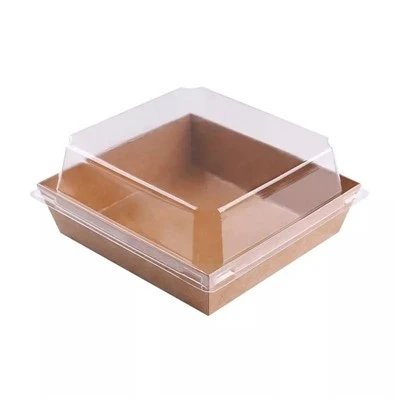
If you’re not sure which PP blister cup is right for your business, or you have questions about heat resistance, custom sizes, or ordering bulk, I’m here to help. I’ve been in this game long enough to know that the right packaging makes all the difference, and I’d be happy to chat through your specific needs with you. Don’t hesitate to reach out and connect with us to discuss your requirements—let’s find the perfect PP blister cup for your products.
Snack Food Boxes References
- U.S. Food and Drug Administration. (2023). Food Contact Materials: Polypropylene. FDA.
- European Food Safety Authority. (2021). Opinion on food safety of polypropylene (PP) materials and articles in contact with food. EFSA Journal.
- Thermoforming Division of the Society of Plastics Engineers. (2022). Thermoformed Food Packaging: Performance Standards for Temperature Resistance. SPE.
- Plastics Industry Association. (2021). #5 Polypropylene: Properties and Applications for Food Packaging. Plastics Industry Association.
Wuhan Green Treasure Industry & Trade Co., Ltd.
As one of the most professional pp blister cup suppliers in China, we also support customized service and OEM service. We warmly welcome you to buy durable pp blister cup made in China here from our factory. If you have any enquiry about free sample, please feel free to email us.
Address: T4-1106Dream Zone, No.9 Hongtu 1st Road, Dongxihu District , Wuhan, China.
E-mail: info@greentreasured.com
WebSite: https://www.greentreasured.com/
