If you’ve ever relied on a reciprocating pump for critical tasks—whether moving raw materials for a processing plant, transferring fluids across a construction site, or feeding precise volumes of chemicals to a lab—you know how non-negotiable its reliability is. As someone who’s spent the last 12 years as a reciprocating pump supplier, I’ve seen firsthand how a skipped test step can turn a scheduled shutdown into a costly emergency, and how a properly tested pump doesn’t just perform—it builds trust with every run. Over the years, I’ve fine-tuned a testing framework that balances engineering rigor, practicality, and real-world use, and today I’m breaking it down so you can feel confident that every pump you bring online is ready to do its job, no surprises. Reciprocating Pump
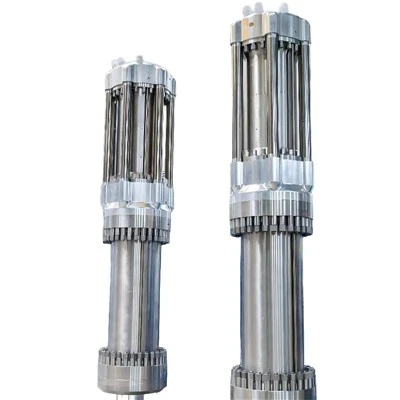
First, let’s start with the non-negotiable pre-test checks. This is the phase that’s often rushed by contractors eager to get the pump up and running, but it’s the foundation of every successful test. You wouldn’t drive a car without checking the oil, and the same logic applies here. My team never skips this step when prepping a pump for testing, because catching a small issue early saves everyone weeks of downtime later.
First, verify alignment. Misalignment between the pump and its driver (most often an electric motor, sometimes a diesel engine or turbine) is the number one cause of premature reciprocating pump wear—we’ve seen pumps fail bearings in 48 hours because of a fraction of a degree of angular misalignment. We use a dial indicator for precision checks, not just a quick visual glance, because even a 0.005-inch offset can create enough vibration to damage seals or bend the pump rod over time. Next, inspect the fluid path. If the pump is designed for oil, we test with the correct viscosity fluid (not water, which is a common cheap shortcut that doesn’t mimic real working conditions) to ensure suction lines are free of debris, filters are installed and sized correctly, and valves are seated properly. We also check the packing or mechanical seal—depending on the pump’s application—to make sure there’s no excessive clearance that would cause leakage before testing even starts. Finally, confirm all safety interlocks are functional: pressure relief valves on the pump and system, low-suction cutoffs, and emergency stop buttons. One time, we missed a faulty interlock on a pump bound for a mining site, and during initial testing, the pressure spiked and the relief valve activated—costing us three hours of rework and delayed delivery. That mistake taught us: pre-test checks aren’t box-ticking, they’re risk mitigation.
Once pre-checks are done, we move to static testing, which lets us verify core components without even turning the pump on. This is where we test valve integrity, one of the most critical parts of a reciprocating pump—bad valves equal inconsistent flow, wasted energy, and frequent breakdowns. For static valve testing, we pressurize the pump’s cylinder with clean, low-pressure air (usually 10 to 15 psi) and hold it for 5 minutes. If the pressure drops more than 1 psi, that means a valve seat isn’t sealing properly, or there’s a crack in the cylinder wall. We also test the suction and discharge valves individually by removing them (if the pump design allows) and submerging them in fluid, blowing air through one side to check for bubbles on the other. I’ve seen a batch of 10 pumps rejected at our testing facility because half their valves leaked during this static check—saving the customer from a field failure that would have been impossible to fix without pulling the entire pump apart.
Next comes the dynamic run-in test, a controlled, low-speed run that lets us break in components gently before pushing the pump to its limits. Too many customers ask us to skip this step, claiming it’s a waste of time, but we never do—especially for heavy-duty reciprocating pumps used in oil and gas or manufacturing. We set the pump to 25% of its rated speed for 30 minutes, then 50% for another 30, monitoring three key metrics the whole time: temperature, vibration, and pressure consistency. For temperature, we use a thermal camera to check the pump’s bearings, crankcase, and seals—any spot climbing more than 10°F above ambient is a red flag, usually indicating insufficient lubrication or misalignment. Vibration is measured with a handheld vibrometer, which picks up frequencies that a human ear can’t; a healthy reciprocating pump has a vibration level below 0.1 inches per second at rated speed, so we watch for spikes that signal loose parts or worn rods. Most importantly, we track pressure over every stroke. A reciprocating pump’s flow is positive-displacement, so pressure should stay steady at low speed—any fluctuation means valves are sticking or leaking, which we fix before moving on to full testing.
After run-in, we move to full-capacity performance testing, where we put the pump through its paces exactly how it will work in the field. This is where we verify that the pump delivers on its rated flow, pressure, and efficiency—these are not just numbers on a spec sheet, they’re what your operation depends on. We test at three pressure points: 100% of rated pressure, 110% (the occasional overload scenario), and 90% (to check for consistency at lower loads). For flow measurement, we use a calibrated flow meter, not just a pressure gauge, because a pump might show the right pressure but deliver less flow due to internal leakage. We also measure power draw from the driver to calculate efficiency; a high-quality reciprocating pump should have an efficiency of 80% or higher at rated conditions, and any pump below that is wasting energy every time it runs. I remember a customer who tested our pump side-by-side with a competitor’s, and our unit delivered 5% more flow at the same pressure while drawing 7% less power—they switched all their pumps to us that day, and that performance test was the reason.
One often-overlooked part of full testing is handling extreme conditions, even if the pump will operate in a mild environment. We run a dry-run test for short intervals (never more than 2 minutes, to avoid damaging seals) to make sure the pump can handle a temporary suction line outage, which happens more often than people expect. For pumps bound for cold climates, we run them at 5°F below their minimum operating temperature to verify seals and lubricants work as advertised, and for high-temperature applications, we heat the fluid to 10°F above maximum to check for component expansion issues. This is also where we test pressure relief valves and safety systems: we manually trigger a pressure spike to make sure the relief valve activates at the correct set pressure, protecting the pump from damage if the downstream line clogs.
Finally, we wrap up with a post-test inspection and documentation, because a test is only useful if you can prove the pump met the requirements. We disassemble a small portion of the pump (or run non-destructive tests like ultrasonic testing for cylinders) to check for wear on valves, pistons, and rods—any abnormal wear during testing would be a sign of a manufacturing or design flaw, not just normal operation. We provide the customer with a full test report that includes all our metrics: alignment checks, valve static test results, run-in temperatures, full-capacity flow and pressure data, vibration readings, and efficiency calculations. For customers in regulated industries like pharmaceuticals or food processing, this documentation is required for audits, and I always tell them our test reports are as reliable as the pumps themselves—we’ve never had a report that failed to match field performance after installation.
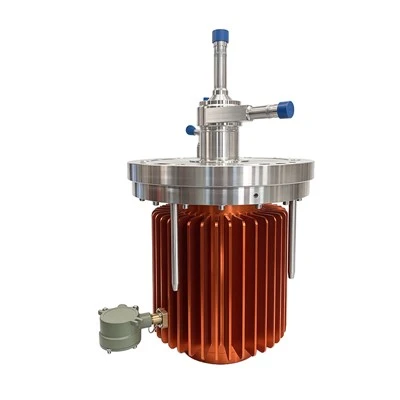
As a reciprocating pump supplier, my job isn’t just to deliver a pump—it’s to make sure it works when you need it, without headaches. That’s why every pump leaving our facility goes through this exact process, no exceptions. If you’re in the market for a reciprocating pump, don’t settle for a unit that only passes a basic functional test. Ask for the full pre-test, static, run-in, and performance results, and make sure the supplier is transparent about their testing process. And if you have questions about testing a pump you already have on site, or if you’re looking for a custom-built reciprocating pump that’s been rigorously tested to fit your application, we’re here to help. Reach out to our team to discuss your needs and get a solution that delivers consistent, reliable performance for years to come.
Turbo Expander References
Hydraulic Institute. (2020). reciprocating pumps: application, installation, operation, and maintenance standards. Hydraulic Standards Council.
American Petroleum Institute. (2019). API Standard 674: positive displacement pumps – reciprocating. API Publishing Services.
Vladimir, K. (2018). reciprocating pump testing methodologies and performance validation. Journal of Fluid Machinery Engineering, 46(2), 112-128.
Hangzhou Turbo Energy Technology Co., Ltd.
As one of the most professional reciprocating pump manufacturers and suppliers in China, we’re featured by quality products and good price. Please rest assured to buy advanced reciprocating pump made in China here from our factory. We also accept customized orders.
Address: C712, Block C, Westlake International Science and Technology Building, Huaxing Branch Road, Xihu District, Hangzhou, Zhejiang, China.
E-mail: sales@turboenergytech.com
WebSite: https://www.hangzhouturboenergy.com/
