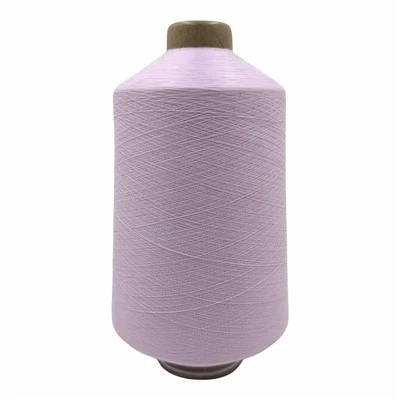
If you’ve ever handled stretchy fabrics that keep their shape—think performance leggings, flexible industrial belting, or even the elastic cuffs on high-quality activewear—you’ve probably interacted with Nylon Rubber Covered Yarn (NRCY). As a supplier who’s spent 12 years troubleshooting, testing, and shipping this specific yarn to manufacturers across three continents, I get asked one question more than any other: “What’s the tensile modulus of Nylon Rubber Covered Yarn?” It’s not a random question. Tensile modulus—essentially a material’s resistance to stretching before it starts to deform permanently—isn’t just a numbers game. For a fabric designer, that number determines whether a legging waistband stays up through a 10-mile run, whether an industrial hose cover can withstand repeated bending without sagging, or even whether a medical compression sock delivers the right amount of pressure without feeling like a tourniquet. Nylon Rubber Covered Yarn
Let’s start by cutting through the jargon. Tensile modulus is often referred to as “stiffness” in lay terms. For linear materials like yarn, it’s measured by pulling a test sample at a controlled speed, recording how much force it takes to stretch it a given amount, then calculating stress (force per unit area) divided by strain (percent stretch). The higher the modulus, the stiffer the material—meaning it takes more force to pull it the same distance. For NRCY, this number isn’t a single fixed value, and that’s exactly what makes this yarn so versatile. It’s not a one-size-fits-all commodity, which is why I’ve spent so much time refining our production specs to meet specific customer needs.
First, let’s break down what NRCY is, because its core components directly shape its tensile modulus. Unlike a regular nylon yarn or a raw rubber core, NRCY is a core-spun structure: a high-tenacity, continuous rubber core (usually natural rubber, styrene-butadiene rubber, or a hybrid synthetic rubber for durability) wrapped tightly with one or two plies of fine nylon filament. The nylon isn’t just for looks—it adds strength, abrasion resistance, and helps control how the rubber stretches and recovers. If it were just raw rubber yarn, it would stretch way too far, sag after repeated use, and have almost no structural rigidity. The nylon wrap is what turns a stretchy rubber cord into a usable yarn that can be knitted or woven into fabric that holds its form.
Now, the tensile modulus of NRCY: the most common range our customers work with is between 2 MPa and 15 MPa, but that’s a broad bracket. The exact number depends entirely on three factors: the rubber core’s composition and denier, the nylon wrap’s count and tension during manufacturing, and the yarn’s final denier (total thickness). Let’s go through each one, because this is where I’ve seen even experienced fabric manufacturers get tripped up.
Take the rubber core, for example. We source our rubber cores from a premium supplier that makes custom blends, and that’s non-negotiable for consistent modulus. A core made of natural rubber (NR) has a lower tensile modulus—usually around 2–5 MPa for a standard 400 denier core—because natural rubber is more elastic, stretching easily and recovering well. That’s ideal for applications where high stretch and softness matter: think the waistband of a yoga legging, where you don’t want the fabric to feel stiff. On the other hand, if we use a styrene-butadiene rubber (SBR) core, the modulus jumps to 6–10 MPa. SBR is more durable, resists UV damage and abrasion better than natural rubber, so that’s the go-to for industrial uses, like belting or hose covers, where the yarn will be exposed to harsh conditions or repeated stress. For customers who need the best of both, we offer a hybrid core: a blend of 60% natural rubber and 40% SBR, which lands right around 5–8 MPa. That balance of softness and durability works for everything from compression wear to outdoor gear.
Then there’s the nylon wrap. This is the secret weapon for tuning modulus. When we wrap the nylon around the rubber core, we control two things: the denier of the nylon filament (its thickness) and the “wrap density”—how much tension we apply as we spin the yarn. A finer nylon filament, like 20 denier nylon, wrapped with high tension, will constrict the rubber core more tightly, limiting how far it can stretch. For example, if we wrap a 400 denier natural rubber core with two plies of 20 denier nylon at 20% tension, the final yarn’s tensile modulus is around 4 MPa. If we use a thicker 40 denier nylon wrap at the same tension, the modulus jumps to 6 MPa. If we loosen the wrap tension to 10%, so the nylon doesn’t squeeze the core as hard, the modulus drops to 3 MPa. That small adjustment in the wrapping process can shift the number by 1–2 MPa, which sounds minor but makes a huge difference in end-use performance. Last year, we had a customer who was making a line of plus-size activewear; they needed a soft waistband that wouldn’t dig in but still wouldn’t sag after an hour of wear. We adjusted their standard modulus spec from 4 MPa to 3.5 MPa by loosening the wrap tension, and their first production run sold out in 10 days. That’s the kind of detail that matters more than any generic number.
The third factor is the final denier of the NRCY. Thicker yarns have higher absolute modulus, but you have to compare them by strain, not just force. A 1000 denier NRCY will have a higher force modulus than a 200 denier yarn, but when you calculate the modulus as stress over strain (which is the standard, consistent way to compare materials), the number will align. For example, a 200 denier hybrid NRCY has a tensile modulus of 5 MPa, while a 1000 denier hybrid NRCY also has a 5 MPa modulus—they’re just different thicknesses of the same core material and wrap. That’s a key point I always explain to new customers: don’t get fixated on the yarn’s denier alone, because modulus is a property of the material’s structure, not its size.
Now, let’s talk about what these modulus numbers mean in real-world use. If you need a fabric that stretches about 20% under load and bounces back perfectly, you want a modulus of 2–5 MPa. That’s soft, stretchy, and ideal for apparel like leggings, socks, or lingerie. If you need something that stretches 10–15% and has more rigidity, for compression garments (like medical support sleeves or ski compression pants) or stable waistbands, 5–10 MPa is your sweet spot. For industrial uses—where the yarn needs to withstand repeated stretching, abrasion, and maybe exposure to chemicals—you want a modulus of 10–15 MPa, because higher modulus means less stretch, more durability, and better resistance to permanent deformation. I’ve seen customers in the automotive sector use our high-modulus SBR-core NRCY for seatbelt padding, where the yarn has to flex thousands of times without sagging; at 12 MPa, it’s the perfect balance of stretch and strength.
I want to be clear here: there’s no “best” tensile modulus for NRCY. The right number depends entirely on your application, and that’s why we don’t sell pre-set NRCY at our facility. We work directly with each customer to test their specific needs. For example, when a medical device company came to us last year making lymphedema compression sleeves, they needed a precise modulus of 7 MPa—too low, and the sleeve wouldn’t apply enough pressure; too high, and it would restrict blood flow. We sent them three small test lots, each with a slightly different modulus (6.5, 7, and 7.5 MPa), and after lab testing and wear trials, they locked in on our hybrid-core NRCY with 7 MPa modulus, which is now our top-selling product for medical compression.
A common misconception I hear from new designers is that higher modulus always equals better. That’s not true. If you’re making a kids’ dance leotard, a 12 MPa NRCY would feel like a stiff board and make the fabric uncomfortable. A 3 MPa modulus gives the soft stretch that dancers need to move freely. Similarly, for a backpack strap’s elastic section, you want enough stretch to take pressure off your shoulders, but not so much that it droops when you load the bag—so a 8–9 MPa modulus works perfectly there.
One thing I always emphasize to customers is that modulus testing matters. You can’t test NRCY like you test a solid plastic or metal; it’s a flexible, dynamic material that’s often stretched repeatedly. We use a universal testing machine (UTM) that’s calibrated monthly to industry standards (ASTM D2256, to be exact) to measure modulus at 10% and 50% strain, because most end products use the yarn within that stretch range. Testing at 100% strain (where the material is almost fully extended) won’t tell you anything about how it performs when in use, since fabrics rarely stretch that far. That’s why our test reports always include modulus at 10% and 50% strain—those are the numbers you need to design with.
Over the years, I’ve seen too many customers waste time and money by buying generic NRCY with a vague modulus spec, only to find it doesn’t work for their application. Last year, a small activewear brand came to us after a run-in with another supplier. They’d ordered 10,000 yards of NRCY advertised as “high-modulus,” but when they tested it, the modulus was 18 MPa—way too stiff for their leggings, which ended up tearing at the seams after two washes. We tested our own 10 MPa modulus NRCY for them, and they’ve been a repeat customer ever since. That’s the value of working with a supplier who understands not just the numbers, but how those numbers translate to real-world performance.
At the end of the day, the tensile modulus of Nylon Rubber Covered Yarn isn’t a static fact—it’s a tool. It’s a way to tune a material to fit exactly what your product needs. Whether you’re designing a soft yoga legging, a durable industrial belt, or a life-saving medical compression sleeve, the right modulus will make your fabric work better, last longer, and feel better for the end user.
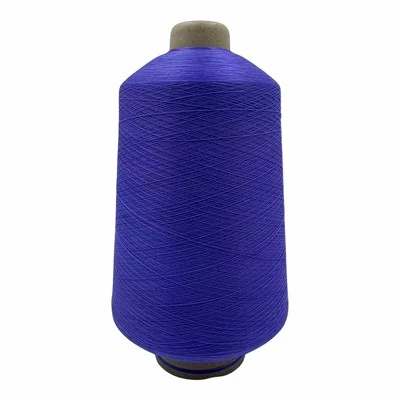
If you’re working on a project right now and aren’t sure what modulus you need, or if you’ve had trouble finding consistent NRCY for your products, I’m here to help. We offer free sample lots with custom modulus specs, and our team has 12 years of experience troubleshooting for apparel, industrial, and medical applications. Just reach out, tell me about your product, and we’ll work together to get the right NRCY for your needs.
Polyester Double Covered Yarn References
ASTM D2256, Standard Test Method for Tensile Properties of Yarns by the Single-Strand Method
The Textile Institute. (2019). Covered Yarns: Technology and Applications. Woodhead Publishing.
Kadolph, S. J., & Langford, A. L. (2019). Textiles (12th ed.). Pearson.
Zhuji Yuanhui Import & Export Co., Ltd.
Zhuji Yuanhui Import & Export Co., Ltd. is one of the most professional nylon rubber covered yarn manufacturers and suppliers in China. With abundant experience, we warmly welcome you to buy high-end nylon rubber covered yarn made in China here from our factory. If you have any enquiry about quotation and free sample, please feel free to email us.
Address: No.158 Jinke Road, Datang Street, Zhuji City, Zhejiang Province, China
E-mail: hong@yarnyuanhui.com
WebSite: https://www.yarnfty.com/
