Hey there! I’m a bentonite supplier, and I’ve been in this business for quite a while. One question that often comes up is how bentonite behaves under high pressure. Well, let’s dive right into it. Bentonite
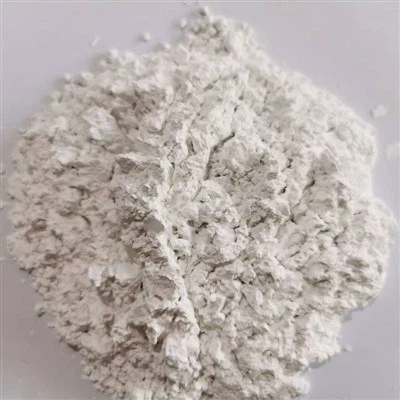
First off, what is bentonite? Bentonite is a type of clay that’s mainly made up of montmorillonite. It’s got some pretty cool properties, like high swelling capacity, good adsorption ability, and excellent rheological properties. These properties make it super useful in a bunch of industries, from construction to drilling.
When it comes to high – pressure situations, bentonite’s behavior can be quite interesting. Under high pressure, the first thing that happens is the compression of the bentonite particles. You see, bentonite has a kind of layered structure. When pressure is applied, these layers start to get closer together.
The swelling capacity of bentonite is one of its most important features. In normal conditions, bentonite can absorb a large amount of water and swell up. But under high pressure, this swelling is restricted. The pressure squeezes out some of the water that the bentonite has absorbed. This means that the volume of the swollen bentonite decreases. It’s like trying to squeeze a sponge; the more pressure you apply, the less water it can hold.
Another aspect is the change in the rheological properties. Rheology is all about how a material flows. Bentonite forms a kind of gel – like structure when mixed with water. Under high pressure, the gel structure gets disrupted. The particles are forced closer together, and the bonds between them change. This can lead to a change in the viscosity of the bentonite – water mixture. In some cases, the viscosity might increase, making it thicker and less fluid. In other cases, if the pressure is really high, the gel might break down completely, and the mixture could become more like a liquid.
In the construction industry, bentonite is often used in foundation work. For example, it can be used to create a waterproof barrier around a building’s foundation. When the foundation is under high pressure from the weight of the building and the surrounding soil, the bentonite needs to maintain its properties. If the pressure is too high, the bentonite might not be able to keep its shape and could lose its waterproofing ability.
In the drilling industry, bentonite is used as a drilling fluid. It helps to lubricate the drill bit, carry the cuttings to the surface, and maintain the stability of the borehole. Under high – pressure conditions in the well, the bentonite has to perform well. If the pressure causes the bentonite to lose its rheological properties, it could lead to problems like poor hole cleaning or even a collapse of the borehole.
Now, let’s talk about how we can make bentonite perform better under high pressure. One way is to modify the bentonite. We can add some additives to it. For example, adding polymers can improve the strength of the bentonite gel. These polymers can form cross – links between the bentonite particles, making the structure more stable under pressure.
Another approach is to control the water content. By adjusting the amount of water in the bentonite – water mixture, we can optimize its properties. A lower water content might make the bentonite more resistant to high pressure, as there’s less water to be squeezed out.
As a bentonite supplier, I’ve seen firsthand how important it is to understand how bentonite behaves under high pressure. Different customers have different needs, and we need to be able to provide the right type of bentonite for their specific applications. Whether it’s for a small construction project or a large – scale drilling operation, we’ve got to make sure the bentonite can handle the pressure.
If you’re in the market for bentonite and you’re dealing with high – pressure situations, we’re here to help. We’ve got a wide range of bentonite products, and we can work with you to find the best solution for your needs. Whether you need a bentonite with high swelling capacity or one that’s more resistant to pressure, we can offer you the right product.
If you’re interested in learning more or want to start a purchase negotiation, don’t hesitate to reach out. We’re always happy to have a chat and see how we can help you with your bentonite requirements.
Volcanic Rock References:
- "Clay Minerals: Their Structure, Behaviour and Uses" by R. E. Grim
- "Drilling Fluids Technology" by H. C. H. Darley and George R. Gray
Lingshou County LM Mineral Products Co., Ltd.
As one of the most professional bentonite manufacturers and suppliers in China, we’re featured by quality products and good service. Please rest assured to buy customized bentonite made in China here from our factory. Contact us for more details.
Address: Dongzhuang Village, Nanyanchuan Township, Lingshou County, Shijiazhuang City, Hebei Province
E-mail: lmwtwz@163.com
WebSite: https://www.lmwtz.com/
