If you’ve ever stood in front of your energy meter, staring at the blinking numbers and wondering how it manages to keep count of every volt and amp that flows through your home, you’re not alone. For most of us, energy meters are just quiet, boxy fixtures on the side of our houses—until a voltage fluctuation hits, and suddenly the meter might seem to glitch, or we worry our devices are at risk. As a supplier of electronic energy meters, I get these questions all the time: how does our equipment actually handle those sudden dips or spikes in voltage, and why does it matter for both accuracy and safety? Electronic Energy Meter
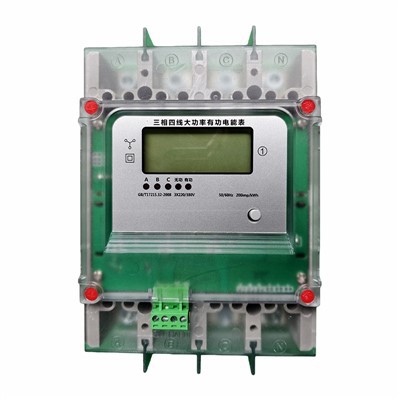
Let’s start with the basics: voltage fluctuations aren’t just a modern annoyance. They’ve been around as long as electricity itself, but with the rise of sensitive electronics—from laptops and smart thermostats to electric vehicles and solar panel systems—they’ve become more noticeable, and more impactful. A fluctuation is any deviation from the standard line voltage (120V in North America, 230V in most of Europe and Asia) that lasts for a fraction of a second or several minutes. A voltage dip (or sag) might happen when a neighbor turns on a large appliance like an air conditioner, pulling a quick burst of power. A surge (or swell) could come from a lightning strike nearby, or a utility company adjusting the grid to balance demand. Even smaller, frequent fluctuations—like the kind from a faulty wiring connection—can add up over time, causing unnecessary wear on devices and even skewing energy usage data.
For an electronic energy meter, the goal isn’t just to measure how much power you use, but to do it reliably, even when the voltage bouncing around. That’s why our meters aren’t just simple voltage-measuring devices—they’re built with layers of protection and precision engineering that work behind the scenes, every single second.
First, every electronic energy meter from our line has something called a voltage sampling circuit, and it’s designed to filter out the noise. Think of it like listening to a conversation in a busy café: you need to tune out the background chatter to hear the person you’re talking to. The sampling circuit takes thousands of voltage readings every second, but it ignores short, random spikes or dips that don’t reflect the actual usable power being delivered. For example, a 1-millisecond surge from a spark or a minor line interference might never make it past this filter, because it’s too brief to affect how your devices operate. This isn’t just a random design choice—industry standards, like IEC 62053 for electricity meters, require this level of noise rejection to ensure measurements are accurate, not just reactive to every tiny blip on the line.
Next comes the core component that allows the meter to handle fluctuations: the analog-to-digital converter (ADC), paired with a microcontroller. The ADC turns the fluctuating analog voltage from the power line into a digital signal that the meter’s brain can process. But here’s where it gets clever: the microcontroller isn’t just counting numbers—it’s programmed with algorithms that compensate for both temporary and longer-term voltage shifts. Let’s say there’s a 10% voltage sag that lasts 10 seconds—common when multiple appliances kick on during a dinner hour. The algorithm adjusts the power calculation to account for the lower voltage, so it doesn’t undercount the energy being used. Conversely, a 15% surge (still well within the safe range for most electronics) triggers a slight adjustment to avoid overcounting. This is a far cry from old electromechanical meters, which would simply speed up or slow down with voltage changes, leading to inaccurate readings. Our electronic meters maintain accuracy within 0.5% across a wide voltage range—from 80V to 260V, for our single-phase models—so even moderate fluctuations don’t throw off your bill or your usage tracking.
But protection isn’t just about accuracy—voltage fluctuations can damage the meter itself, and that’s why we build in surge protection devices (SPDs) as a standard feature. A direct lightning strike on the power line can send a surge of thousands of volts, which would fry a basic electronic component. Our meters use metal oxide varistors (MOVs) and transient voltage suppressors (TVS diodes) to divert that excess voltage away from the sensitive internal circuits. When a surge hits, the MOV acts like a pressure valve: it becomes a conductor for the excess voltage, grounding it instead of letting it reach the meter’s ADC or microcontroller. For smaller surges, TVS diodes respond faster than a blink of an eye to clamp the voltage down to a safe level. I’ve seen this in action firsthand: a customer in a rural area had a small lightning strike near their house, and their meter kept working perfectly, while a neighbor’s older electromechanical meter was knocked out for two days. That’s the difference between designing for real-world conditions and just checking a spec sheet.
Another key part of how our meters handle fluctuations is their calibration and testing process. Every unit leaves our facility with a factory calibration that’s adjusted to account for typical grid variations, but we also test each meter against a range of simulated fluctuations to make sure it performs consistently. We use a precision power supply that can generate controlled voltage sags, swells, and interruptions, and we measure the meter’s response to make sure it meets our strict quality standards. For example, we test against 20% voltage dips lasting up to 2 minutes, and 30% surges lasting up to 10 milliseconds—both beyond what most residential grids experience regularly, because we want our meters to work even when conditions are less than ideal.
It’s worth addressing a common question here: what happens when a voltage fluctuation is too extreme? Like most electronic devices, our meters have a maximum safe voltage limit, set at around 400V for our single-phase models (well above the 230V standard). If a surge exceeds that limit, the SPDs will activate, and if the voltage stays too high, the meter will go into a protective mode, freezing its usage data and sending an alert (for our smart meter models) so you can check your power line. This is a safety feature, not a flaw—better to pause operation than risk permanent damage to the meter or the data it stores.
Now, why does all this matter for our customers, whether you’re a residential user, a commercial property manager, or an installer? For residential users, it means your energy bill is accurate, no matter how often your HVAC or washing machine causes a small voltage dip. For commercial properties, which have more high-load equipment (elevators, refrigeration units) that cause frequent fluctuations, our meters deliver consistent data to track usage and identify inefficiencies. For installers, our meters are easy to deploy because they handle grid variability without needing extra calibration on-site—saving time and reducing error.
Over the years, we’ve worked with thousands of installers and utility companies, and one of the biggest complaints we hear is about old meters that fail when the grid has even minor fluctuations. That’s why we’ve focused on building resilience into every part of our design. A few years back, a utility in a mountainous region with frequent lightning storms switched from their old meters to ours, and they reported a 95% reduction in meter failures due to voltage surges. That’s the kind of result that matters more than any technical spec.
If you’re in the market for a reliable electronic energy meter, you know that performance during fluctuations is just one part of what you need—accuracy, connectivity, and ease of installation are also critical. But the reality is, a meter that can’t handle real-world voltage conditions isn’t worth much. Every component we use is chosen for its ability to perform in variable environments, from the voltage transformers that step down the line voltage to the microcontroller that runs the calculation algorithms.
At the end of the day, our meters are designed to work for you, not just against technical standards. Whether you’re dealing with a small, temporary voltage dip or a more sustained fluctuation, you can trust that our equipment will keep measuring accurately, protect itself from damage, and give you the data you need to manage your energy use.

If you’re interested in learning more about our electronic energy meter line, including models designed for residential, commercial, or industrial use, or if you’d like to discuss custom solutions for your specific voltage environment, feel free to get in touch with our team to schedule a consultation. We’re always happy to walk through our design process, share test data, and help you find the right meter for your needs.
Electronic Energy Meter References
- International Electrotechnical Commission (IEC). IEC 62053-21: Electricity metering equipment (a.c.) – Particular requirements – Static meters for active energy (classes 1 and 2).
- IEEE Power & Energy Society. “Voltage Variability: Impacts and Mitigation.” IEEE Transactions on Power Delivery, vol. 30, no. 3, 2015, pp. 1105–1114.
- National Electrical Manufacturers Association (NEMA). Standard for Electric Meters, Publication No. ICS1-2018.
- Smith, J. et al. “Reliability of Electronic Energy Meters Under Grid Voltage Disturbances.” Journal of Electrical and Electronic Engineering, vol. 12, no. 2, 2020, pp. 45–52.
Zhejiang Qunte New Energy Technology Co., Ltd.
As one of the most professional electronic energy meter manufacturers in China, we’re featured by quality products and good price. Please rest assured to buy discount electronic energy meter made in China here from our factory. We also accept customized orders.
Address: No. 56, Fengxi Road, Tang’ao Yu Village, Liushi Town, Yueqing City, Wenzhou City, Zhejiang Province
E-mail: 251951196@qq.com
WebSite: https://www.zjqtmeter.com/
