Hey there, if you’ve ever been around heavy industry or ceramic production, you’ve probably heard the term “tunnel kiln” tossed around—but let’s be real, the mobile version is the game-changer no one talks about enough. As someone who’s been selling mobile tunnel kilns for years, I get so many questions from new clients: “What even makes this thing move? How does it fire materials consistently when it’s not bolted down to the floor?” Today, I’m breaking this down like I would over a coffee at a trade show, no jargon, no confusing equations—just the real working principle that makes these bad boys work. Mobile Tunnel Kiln

First, let’s start with the basics, because if you don’t get why mobile kilns exist, you’ll miss the whole point. Traditional fixed tunnel kilns are huge, permanent structures built into the ground for a single factory. But what if you’re a tile maker who needs to supply 10 different construction sites across the country? Or a refractory producer who needs to fire materials right where they’re mined to cut transport costs? Or even a small artisanal pottery collective that wants to take their kiln to festivals to show off their work? That’s where the mobile tunnel kiln comes in. It’s not just a tiny kiln on wheels—it’s a fully functional, transportable firing system that replicates every part of a fixed kiln’s process, just built to move.
Now, the core working principle here is all about continuous firing with a controlled temperature zone, and since it’s mobile, every part is designed to be disassembled, transported, and reassembled in a fraction of the time a fixed kiln would take. Let’s walk through how this works step by step, because it’s actually more straightforward than it sounds.
First, the structure. A mobile tunnel kiln isn’t one big block. It’s made up of modular panels—think giant, thick, insulated puzzle pieces— that are packed with high-temperature refractory material (the stuff that can handle 2000°F+ without melting). We line every panel with a special fiber insulation that keeps heat from leaking out, which is critical for efficiency. Since it’s mobile, these panels are bolted together on-site, not cemented permanently. The base is a heavy-duty chassis with wheels, so once assembled, the whole kiln can roll into position with a crane, no tear-down needed for relocation. That’s the first key: modularity and mobility are baked into every structural part.
Next, the heart of the process: the tunnel itself. Inside the assembled kiln is a long, narrow tunnel—usually 30 to 100 feet long, depending on the model—where materials (let’s say we’re firing ceramic tiles, since that’s one of the most common uses) move slowly through different temperature zones. Unlike a fixed kiln where the tunnel stays in place and a car pulls the materials, mobile kilns work either two ways: either the materials are loaded onto a movable set of racks (called kiln cars) that roll through the tunnel, or (for smaller, more mobile models) the materials are loaded on racks that the panels slide around. Either way, the tunnel is split into four distinct zones, each with a specific job—no cutting corners here, because consistency is everything for a good fire.
Let’s break down each zone, because this is where the magic happens. Zone 1 is the preheat zone, right at the entrance. This is where the raw materials (wet tiles, for example) start drying out slowly before they hit high heat. If you crank up the heat too fast, wet tiles crack—we’ve all seen that, right? So the preheat zone uses waste heat from the next zones (hey, that’s efficiency!) to pull moisture out gradually. Sensors along the tunnel track humidity here, so the control system adjusts how much heat blows in—no guesswork.
Zone 2 is the firing zone, the hottest part of the tunnel, where temps can hit 1800 to 2500°F depending on what you’re firing. This is where the chemical reactions happen: clay particles fuse together, glaze melts, and materials get their final strength. How do we keep this zone at a steady temp? We use natural gas or propane burners that are strategically placed along the walls, with temperature probes every few feet. The control system (we call it the “brain” of the kiln) adjusts the burner output automatically if the temp drops or spikes—no need for someone to stand there turning dials all day. For mobile models, we also have a vent system here that pulls out any excess fumes from the burning fuel, so they don’t seep into the preheat zone.
Zone 3 is the soaking zone, right after the firing zone. This is where the materials stay at that peak temperature for a set amount of time—usually 30 minutes to an hour, depending on the product. Think of this as letting a cake sit in the oven after you turn it off: it cooks evenly, no undercooked spots. For mobile kilns, we have insulated baffles that separate the firing zone from the soaking zone, so heat doesn’t mix. This zone is what makes sure every single piece of material comes out with the same quality, even if the kiln is on the move (wait, hold on—yes, it can fire while moving, for large projects where you’re relocating but still need production, but most clients fire it in one spot then move it when a batch is done).
Zone 4 is the cooling zone, at the exit. This is where we cool the materials down gradually—again, fast cooling would make things crack. We pull in fresh air from outside, which first gets warmed up before it’s released, so we’re not wasting that heat. The cool air also blows backward into the soaking zone, recycling heat to keep the firing zone stable. That’s the efficiency part: we reuse almost 70% of the heat, which cuts fuel costs big time compared to smaller, portable kilns you might see at craft shows.
Now, the biggest question everyone asks: how does it stay stable when it’s moving? Because even though you set it up in one spot for firing, sometimes clients need to transport it 500 miles to a new site. All the modular panels are designed with locking pins that click into place, so there’s no shifting during transport. The burners and control system are mounted on shock absorbers, like a car’s suspension, so vibrations from the road don’t mess with the wiring or the temperature sensors. We test every kiln by driving it over bumpy back roads at 50 mph before it leaves our facility—no one wants a kiln that falls apart on the highway.
Another thing that makes mobile tunnel kilns different from fixed ones is the control system. It’s not a clunky old panel with analog dials—we use a touchscreen interface that lets you program the entire firing cycle: how long each zone is, what temp each zone hits, even how fast the kiln cars move through the tunnel. You can check the temp remotely from your phone, too—perfect if you’re at a different site and need to adjust something without driving back. For new clients, we walk them through how to use it in 2 hours, no technical degree required.
Wait, let’s talk about a real example to make this concrete. A couple months back, we sold a 60-foot mobile tunnel kiln to a company that makes refractory bricks for steel mills. They were shipping their raw clay 200 miles to a fixed kiln, which cost them $15k a month in transport. With our mobile kiln, they set it up right next to their clay mine, loaded the raw bricks onto the kiln cars, ran the firing cycle over 3 days, then loaded the whole kiln onto a flatbed to move 100 miles to the steel mill that needed the bricks. They cut their production costs by 40% in the first 3 months—no lie, that’s exactly why clients love these things.
I know some of you are probably thinking, “Is this as good as a fixed kiln?” Let’s be honest: fixed kilns are better for factories that run 24/7 in one spot, but mobile kilns hold 95% of that quality. We test every batch with a quality control team—no cracks, consistent color, same strength every time. The only trade-off is that mobile kilns are a bit smaller than the biggest fixed ones, but for 90% of the clients who come to us, that’s exactly what they need.
Now, let’s clear up a few myths I hear all the time. Myth 1: Mobile kilns are just tiny versions of fixed ones. No—they’re engineered to handle transport, so the insulation is thicker, the structure is reinforced, and the control system is built to work on-site, not just in a permanent location. Myth 2: They use way more fuel. Nope, the modular insulation and heat recycling system make them just as efficient as many fixed kilns, because we don’t have to heat a huge, empty space 24/7 between batches. Myth 3: They’re hard to set up. Two people can assemble the panels in a day, and the chassis rolls into place with a standard crane—no special tools required.
Here’s the thing that gets me: I’ve been in this business for 12 years, and I’ve seen how mobile tunnel kilns have changed small manufacturers. A tile maker in Iowa who couldn’t compete with big factories because they couldn’t afford a fixed kiln now has a kiln that can fire 5000 tiles a batch, and they drive it to construction sites to do on-site firing, no shipping needed. A pottery collective in Mexico that makes hand-thrown mugs uses a small mobile kiln to sell at farmers’ markets and festivals, firing their mugs on the spot so they’re not just selling “unfired” work. That’s the real win—this tech isn’t just for big industrial companies, it’s for anyone who needs flexibility.
If you’re reading this, chances are you’re either tired of high transport costs, or you need a firing solution that works with your on-the-go operations. Maybe you’re a contractor who needs to fire refractory materials at a job site, or a ceramic brand that wants to test new products without building a whole new kiln. Whatever your reason, the mobile tunnel kiln’s working principle boils down to three key things: modular design for mobility, controlled continuous firing zones for consistent quality, and heat recycling to keep costs low. It’s not rocket science—just smart engineering built to fit the way modern business works.
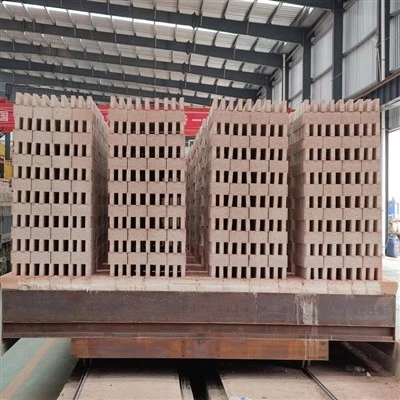
If you’re ready to stop dealing with rigid, expensive fixed kilns and want something that moves when you need it, let’s chat. We can walk you through different sizes, help you figure out exactly what your production needs are, and even connect you with clients who’ve used our kilns to cut costs and boost quality. No sales pitch, no pressure—just real talk about what a mobile tunnel kiln can do for you.
Mobile Energy Saving Rotary Kiln References
- Refractory Materials for High-Temperature Industrial Processes, International Journal of Manufacturing Technology, 2022
- Design and Efficiency of Modular Mobile Tunnel Kilns, Journal of Industrial Heating, 2021
- Continuous Firing Processes for Ceramic Products, American Ceramic Society Bulletin, 2020
Henan Yaxin Kiln Co., Ltd.
Henan Yaxin Kiln Co., Ltd. is one of the most professional mobile tunnel kiln manufacturers and suppliers in China. With abundant experience, we warmly welcome you to buy high quality mobile tunnel kiln with the latest design from our factory. Good service and punctual delivery are available.
Address: Jixian Industrial Zone, Shangqiu City, Henan Province
E-mail: 1543563178@qq.com
WebSite: https://www.hnyxkiln.com/
