When I chat with shop owners, production managers, and small to mid-size machine shop owners, one question comes up more than anything else: “How the hell do I pick a turning and grinding compound machine tool that actually fits what I need right now?” It’s not just about grabbing the fanciest unit or the cheapest one—get that wrong, and you’ll waste cash on something that can’t handle your parts, or worse, break down mid-job and shut your whole line down. As someone who’s been selling these machines for over 12 years, I’ve seen every mistake in the book, so let’s break this down like we’re hanging out at the shop floor, not a boring sales pitch. Turning and Grinding Compound Machine Tool
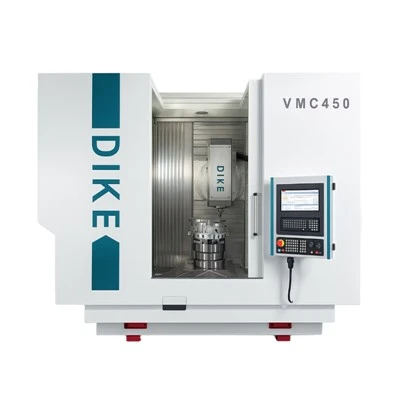
First, stop skipping the deep dive into your actual production needs. I can’t tell you how many times a customer comes to me saying “I need a compound machine” without giving me any real details. “What parts are you turning?” “What’s the diameter range of those parts?” “Are you doing rough cuts, finishing, or both?” “What’s your daily run volume?” These aren’t tiny questions—they’re make-or-break. For example, if you’re making small, intricate medical implants, you don’t need a machine that can handle 3-foot diameter turbine parts. That’s overkill, and you’ll pay 30-40% more for something you’ll never use. On the flip side, if you’re cranking out 500+ heavy-duty automotive axles a day, a tiny desktop-style compound machine won’t hold up—it’ll wear out in 6 months.
Let’s get specific on part size first. Every compound machine has a “max swing diameter” and “max work length.” Swing diameter is the total space the machine can wrap around a part, so if your largest part is 18 inches, don’t get a machine with a 20-inch swing—you’ll have extra room that’s useless, but also, wait for it: if you ever need to make a 19-inch part, you’re screwed. I’ve had customers buy a machine with just enough swing for their current parts, then six months later a big order comes in and they can’t fit it. And max work length? That’s how long a part can be. If you’re making 24-inch hydraulic cylinders, a machine with a 20-inch max work length is a disaster. Measure your longest part, add an extra 2 inches for tool clearance, and go with that. No exceptions.
Next up: material and finish requirements. Turning is for cutting material down, grinding is for super smooth finishes and tight tolerances. If you’re working with soft metals like aluminum or brass for consumer goods, you can get away with a basic compound machine with a standard grinding wheel. But if you’re working with hard stuff like stainless steel, titanium, or Inconel for aerospace parts? You need a machine with a rigid spindle and high-quality grinding capabilities. Basic machines will glaze the grinding wheel on hard materials, meaning you’ll have to replace it every 50 parts, and your finish will be off. And tolerances? If you’re doing work where a 0.001-inch difference ruins the part (like engine components), don’t cut corners on the machine’s accuracy. Cheaper machines might shift under heavy loads, leading to rejected parts—costing you way more in scrap than the extra for a precise unit.
Then there’s volume and throughput. How many parts are you making in a day, week, or month? Low-volume shops (like custom job shops that do 100 parts a week) don’t need a machine with automated loaders and high-speed cycles—those are a waste. But high-volume shops (500+ parts a day) need automation. Manual loading on a high-volume line means your operator is just loading and unloading parts all day, which is slow, inconsistent, and leads to fatigue mistakes. Automated compound machines will cut your cycle time by 30% or more, and keep quality consistent. I had a customer last year running 300 gear shafts a week on a manual compound machine—he switched to an automated one and cut his labor time by half, plus he could take on 20% more orders without hiring another worker. That’s a no-brainer, but most guys don’t think about the long-term gain of automation when they’re focused on upfront cost.
Now, let’s talk about machine rigidity. This is the part that new buyers overlook all the time. A compound machine is two tools in one, so both the turning and grinding sides need to be stable. If the machine has a flimsy frame, it will vibrate when you’re turning hard material, leading to wobbly parts. Vibration also ruins the grind finish, making it rough even if you set the tool right. How do you check rigidity? Look at the machine’s base—cast iron is way better than steel frames, because it dampens vibration. Also, check the spindle design: direct-drive spindles are stiffer than belt-driven ones for heavy work. I’ve seen a $10k machine with a steel base fail in 3 months, while a $12k machine with a cast iron base is still running like a champ 5 years later. Rigidity isn’t a luxury—it’s how you avoid breakdowns and scrap.
Tooling availability is another big one. Some compound machines only use proprietary tools, meaning if you need a special turning insert or grinding wheel, you have to buy it from the original manufacturer, and it’s way more expensive and takes longer to ship. Open-standard tools are way better—you can buy inserts and wheels from any tooling supplier, which saves you money and means you don’t have to wait a week for a replacement if one breaks. I always tell customers to ask: “Can I use third-party tooling for both turning and grinding?” If the answer is no, think twice. That extra convenience will save you so much headache down the line.
Don’t sleep on service and support. This is the biggest mistake I see small shops make. They buy a super cheap machine from some overseas brand that has no service in the country, and then when it breaks, they have to wait 2 weeks for a technician to fly in, and parts cost a fortune. Local support is non-negotiable. A good supplier will have a service team that can be on-site in 48 hours, or even 24 if it’s an emergency. Also, check if they offer training—if your operator isn’t trained to use the compound machine’s dual functions, you’re not getting the full value out of it. I’ve had customers who bought a machine from another place that didn’t offer training, so their guys were only using half the machine for 6 months, wasting half their investment.
Cost is obviously a factor, but let’s be real: it’s not just the upfront price. Total cost of ownership matters way more. A $15k machine that breaks every 6 months and has expensive parts will cost you $40k over 5 years, while a $20k machine that runs for 10 years with minimal service and cheap tooling will save you $15k. When you’re budgeting, add up the cost of tooling, service, repairs, and lost production time from breakdowns. That’s the number that matters, not the sticker price. I always tell customers: “Don’t buy the cheapest machine—buy the one that gives you the best value for what you actually need, not what the sales guy is trying to upsell you.”
Let’s run through a couple examples to make this concrete. First: a custom job shop that makes small brass components for plumbing fixtures, 80 parts a week, tolerances of 0.002 inches, and a max part size of 12 inches. What do they need? A mid-range compound machine with a 14-inch swing, rigid cast iron base, standard tooling, and optional automation if they want to scale, but not a must right now. They don’t need a $25k high-volume machine, and they don’t need a $10k basic model that will wear out quickly. That sweet spot is around $18k-$22k, and it will do exactly what they need without waste.
Another example: a heavy equipment shop making 400 axles a week, max part size 28 inches, hard steel, tolerances of 0.001 inches. They need a machine with a 30-inch swing, heavy-duty spindle, automated load/unload, cast iron base, and high-quality grinding capability for hard metals. That’s going to be in the $35k-$45k range, but it will cut their cycle time, reduce scrap, and handle the heavy work they need. Buying a cheap machine here would mean they can’t meet their production quotas, and parts would fail inspection all the time.
Now, let’s wrap this up with what to do next. If you’re reading this and nodding along because you’re in the market for a turning and grinding compound machine tool, don’t just scroll past this. Sit down with your team, write down all your details: part sizes, materials, daily/weekly volume, tolerance requirements, and what you actually use the machine for (not what you might use it for someday, unless you’re sure you will). Then reach out—tell them your specific needs, ask questions about service, tooling, and total cost of ownership. A good supplier won’t push you into a machine you don’t need; they’ll help you find the one that fits exactly what you’re doing right now, and can grow with you if you need it later.

Don’t make the mistake I see so many shop owners make: rushing into a purchase because it’s a good deal, or because the sales guy is nice. Take the time to do your due diligence, and you’ll end up with a machine that works for you, not against you. If you’re ready to talk through your specific production needs and figure out the right compound machine for your shop, reach out and let’s connect. We can go over specs, run through numbers, and make sure you get something that doesn’t just check a box—something that makes your production smoother, your parts better, and your business more profitable.
Gear Skiving Machine References
- Machine Tool Tech Association. (2022). Selection Guidelines for Turning and Grinding Compound Machines.
- Industrial Manufacturing Journal. (2023). Total Cost of Ownership Analysis for Multi-Function Machine Tools.
- Aerospace and Automotive Production Standards. (2021). Tolerance Requirements for Combined Turning-Grinding Operations.
Wuxi DIKE CNC Technology Co., Ltd.
As one of the most professional turning and grinding compound machine tool manufacturers and suppliers in China, we have world-leading production equipment and strong manufacturing capabilities. Please feel free to buy customized turning and grinding compound machine tool at competitive price from our factory. Also, pricelist is available.
Address: No. 2, Xianshan Road, Qianqiao Street, Huishan District, Wuxi City, Jiangsu Province, China
E-mail: wxdk@wxdike.com
WebSite: https://www.dike-cnc.com/
