Hey everyone, if you’ve ever stood in front of a musical fountain, stuck there with your popcorn watching the lights sync to that 80s pop track or a soaring classical piece, you’ve probably wondered—how long does this whole thing actually last? Like, how do these water shows keep going year after year without just turning into a random puddle of murky water with a few wobbly jets? As someone who’s been in the musical fountain game for over a decade, building, installing, and fixing these things, I get this question all the time. Today I’m breaking down the real lifespan of a musical fountain, not just the marketing fluff—plus some insider tips that keep them running smooth. Musical Fountain
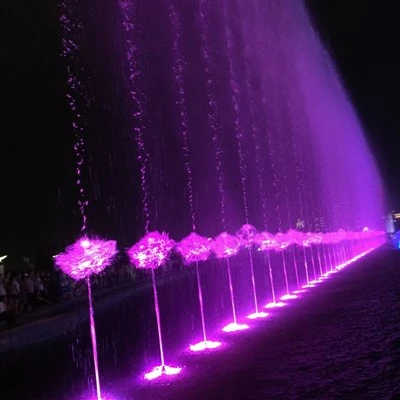
First off, let’s get one thing straight: there’s no one-size-fits-all number here. A lot of people think these fountains are just big outdoor sprinklers, but they’re way more complex than that. Think of them like a high-maintenance car, but instead of an engine, they have pumps, valves, light fixtures, and computer systems that sync everything together. Their lifespan depends on three big things: where they’re installed, how well you take care of them, and how fancy their parts are.
Let’s start with the two main types of musical fountains because that changes everything. If you’re talking about a small, residential one—like a pretty little show in someone’s backyard for parties—those usually last 10 to 15 years. But if you’re talking about a big public one, the kind in a city square or a shopping mall’s outdoor plaza? Those can go anywhere from 15 to 30 years, and I’ve even seen a few hit 35. Now, why the difference? Residential fountains are smaller, often covered or in backyards where they don’t get pelted by weather or random people messing with them. Public ones? They’re out in the elements 24/7, get thousands of people walking by, and run way more often.
Wait, let’s get into the dirty details that actually make them break. First up: water. Yeah, I know, it’s the whole point, but water is the biggest enemy of these things. If your fountain is in a place with hard water—like parts of Arizona or Texas, where water has a ton of minerals—those minerals will build up on pumps, valves, and nozzles, clogging them up within a few years. I’ve had a customer in Phoenix call me last year saying their fancy multi-jet fountain was only shooting half the height it used to, and it turned out the nozzles were so clogged with calcium deposits we had to replace 90% of them. Soft water is better, but even that can get algae growing if you don’t treat it right. Algae eats at rubber parts, grows in pipes, and makes the whole water green and gross. That’s why proper water treatment is non-negotiable, not just for looking good but for keeping things running.
Then there’s the electrical and tech stuff. Modern musical fountains aren’t just plug-and-play—they have a control system, usually a computer that syncs the lights, music, and jet movements. Those systems get outdated fast. We’re talking about tech that’s only 5 to 10 years old that’s no longer supported, so you can’t get replacement parts for the control board, and that’s a huge problem. I’ve seen a shopping mall fountain that was only 8 years old stop working because the main control chip broke, and the manufacturer had stopped making those chips years prior—they had to replace the whole control system for $50k, which was way more than they expected. The lights too: if you use old incandescent lights, those burn out way faster, like every 6 months if they’re running daily. LED lights? Those last 10 to 15 years, easy, and use way less energy, which is a win-win.
Next is weather. If your fountain is in a place with freezing winters—like Chicago or Toronto—you have to winterize it properly, or it’s toast. Water left in the pipes will freeze, expand, and crack the pipes and pumps. I once had a customer in Cleveland who skipped winterization one year, and when they turned it back on in spring, half the jets were leaking because the pipes had split. That cost them $20k in repairs, and they were down for the whole summer. On the flip side, if your fountain is in a super sunny, humid place like Florida, the sun will fade the light fixtures and rubber parts, and humidity can cause corrosion on metal parts.
Now, what about maintenance? That’s the biggest factor people overlook. A fountain that gets cleaned and checked regularly will last twice as long as one you just ignore. We recommend a monthly check-up: cleaning the nozzles, checking water pH levels, making sure the control system is working, and clearing any debris (leaves, trash, bird nests) that can get in. Then a deep service every year, usually before the summer season starts, where you flush the pipes, replace any worn gaskets, and check the pumps. The fountains that skip this? They start having small issues after 2 years, and by year 5 they’re always breaking down. I had a customer who installed a small fountain at a community park and did every single maintenance check we told them, and it’s still going strong after 18 years—no major issues, just minor part swaps when needed.
Wait, let’s talk about the parts themselves. Not all pumps or valves are made the same. If you go with cheap, off-brand parts to save money upfront, you’ll pay for it later. A good quality stainless steel pump will last 10 years, while a cheap plastic one might only last 2. I’ve had customers come to me after 3 years saying their fountain stopped working, and when I opened it up, the pump had corroded because they bought a cheap aluminum one instead of stainless steel. It’s like buying a cheap bike—great for a month, but falls apart fast.
There’s also something called “retrofitting” that can extend a fountain’s lifespan a lot. If your fountain is 10 years old and the control system is outdated, instead of replacing the whole thing, you can upgrade the control system, switch to LED lights, and replace clogged nozzles. That can add 10 to 15 years to its life for a fraction of the cost of a whole new fountain. A customer in Las Vegas did that with their 12-year-old fountain last year—they spent $15k on retrofits instead of $100k for a new one, and now it runs better than it did when it was new.
Now, let’s get real about when it’s time to replace a fountain vs. fix it. If your fountain is over 20 years old and you’re having major issues every year—like pump failures, control systems that can’t be repaired, or pipe corrosion that’s too bad to fix—it’s probably time to start thinking about a new one. But if it’s under 15 years old and the issues are minor (clogged nozzles, a few bad lights), you can keep it going for years with some regular work.
I should also mention usage. A fountain that runs twice a day, every single day of the year, will wear out way faster than one that runs only on weekends during the summer. The public fountains in big cities that run every night for 8 hours? They’re working way harder than a backyard fountain that runs for an hour on Saturdays and holidays.
Let me throw out some real examples from my side of the business. Last year we installed a small musical fountain at a resort in Mexico—they run it 3 times a day, 365 days a year, salt water (wait, right! If it’s near the ocean, salt water is way worse for corrosion, that’s another factor)—and we projected it to last about 18 years. Then we installed a large fountain at a suburban shopping plaza in Ohio, runs 5 nights a week, fresh water, good maintenance, and we projected that one to hit 25 years. And the backyard fountain we did for a family in Florida? They only run it for 3 months a year, cover it in winter, so we said that one could easily hit 20 years.
So, to sum up: the average lifespan of a well-maintained, quality-built musical fountain is between 15 and 25 years, but it can be shorter or longer depending on location, maintenance, and parts. The worst thing you can do is skip maintenance or cut corners on parts—those are the things that turn a 20-year fountain into a 5-year headache.
If you’re thinking about getting a musical fountain for your business, park, or home, don’t just go for the cheapest option. Ask about the parts, the maintenance requirements, and how long it’s projected to last. At the end of the day, a musical fountain is an investment—you want it to look good and run smoothly for years, not be a money pit that breaks every other week.
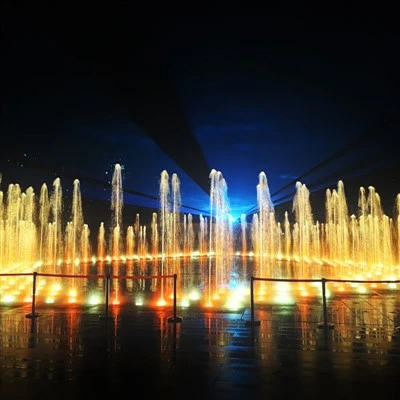
Whether you’re looking for a new fountain to liven up your space, need to fix an old one that’s acting up, or want to retrofitting an existing show to extend its life, hit us up to chat. We’re not the kind of supplier that just sells you a fountain and disappears—we’re here to help you keep it running for years.
Floating Fountain References:
- International Association of Amusement Parks and Attractions (IAAPA). (2021). Maintenance Guidelines for Water-Based Attractions. IAAPA Press.
- Fountain Industry Association. (2022). Lifespan and Durability Metrics for Outdoor Musical Fountains. FIA Technical Report.
- American Water Works Association. (2020). Water Quality Management for Recreational Water Features. AWWA Manual of Water Supply Practices.
- U.S. Department of Energy. (2021). Energy Efficiency Considerations for Outdoor Lighting and Control Systems in Public Spaces. DOE Office of Energy Efficiency & Renewable Energy.
Hebei Mingchuang Landscape Engineering Co., Ltd.
As one of the most professional musical fountain manufacturers in China, we have years of experience in fountain design and installation. Please feel free to buy durable musical fountain made in China here from our factory. Welcome to view our website for more information.
Address: Dongyangzhuang Village, Beidiantou Township, Tang County, Baoding City, Hebei Province
E-mail: 1094267503@qq.com
WebSite: https://www.mcfountains.com/
