If you’ve ever stopped to stare at a life-sized inflatable T-Rex standing outside a retail store, or a replica of a historical landmark at a theme park, you’ve probably wondered what makes it hold its shape. As a supplier of inflatable simulation models, I get that question all the time—not just from customers who want to buy one, but from project managers, event planners, and even engineers who need to make sure a model works reliably for weeks, not just hours. The truth is, inflatables aren’t just “big balloons”; their power requirements are a mix of physics, design, and use case, and cutting corners here is how you end up with a deflating exhibit mid-event. Inflatable Simulation Model

Let’s start with the basics: an inflatable simulation model works by maintaining a consistent internal air pressure that’s slightly higher than the surrounding atmosphere. That pressure holds the fabric taut, so the model keeps its shape instead of collapsing. But air seeps out over time—through tiny seams, porous fabric, and even the material itself. That’s where the power comes in: the blower (or sometimes a compressor, depending on size and use) you choose has to replace that lost air fast enough to keep pressure steady, and it has to do it efficiently so you don’t waste energy or deal with constant noise.
First, let’s break down the key factors that determine how much power you’ll need. The biggest one is the size of the model, right? A small tabletop inflatable replica, like a miniature Viking longship, only needs a tiny amount of air to stay inflated. I’ve tested our 1:20 scale longship, which measures 3 feet long, and its blower runs at about 0.5 cubic feet per minute (CFM) of air flow, with a power draw of just 15 watts. That’s less power than a standard phone charger. But scale up to a 20-foot inflatable model of a woolly mammoth, and you’re looking at something way different. That mammoth takes 12 CFM to hold its shape, and the blower pulls about 120 watts. Go even bigger—our life-sized 30-foot inflatable replica of the Statue of Liberty’s torch, which we built for a Fourth of July parade last year—and you’re at 25 CFM, 250 watts. Size directly dictates the volume of air you need to move, which is the main driver of power use.
Next, the material the model is made of plays a huge role. Not all inflatable fabric is the same. Our standard models use 18-ounce PVC-coated polyester, which is durable, weather-resistant, and has a low permeability—meaning air doesn’t seep through it quickly. For a model made from thinner, cheaper vinyl (sometimes used for temporary party inflatables), permeability is much higher. I’ve had a customer bring back a thin vinyl inflatable dinosaur he bought online, and he had to replace his blower every two weeks because the air seeped out so fast, the blower ran 24/7 and burned out. Our PVC-coated polyester, on the other hand, loses about 5% of its internal air per hour, so the blower only needs to make up that 5% gap. If we used a thinner material, that gap would be 15% or more, so the blower would have to work harder, using 2-3 times the power to keep pressure steady.
Then there’s the pressure requirement itself. Not all inflatables need the same internal pressure. A small decorative model can use just 0.5 pounds per square inch (PSI) over ambient air, which is barely enough to keep the fabric taut. But a model that’s going to be exposed to wind—say, a 40-foot inflatable replica of a rocket displayed outdoors at a science fair—needs higher pressure, around 1.5 PSI, to resist being pushed around by gusts. Wind is a big one I don’t think enough people account for. If you set a low-pressure inflatable outside on a windy day, the wind will push against the fabric, deflating internal space, and the blower has to work extra hard to push air in faster than the wind is pushing it out. For that 40-foot rocket, we sized the blower to handle wind speeds up to 25 mph, which meant upping the power to 400 watts—double what it would take if the model was indoors with no wind.
Location is another factor. Indoor inflatables don’t have to fight wind, but they do have to deal with temperature changes. Warm air is less dense than cool air, so when a model is in a heated room, the air inside expands, and if it’s in a cold outdoor space, it contracts. That means a blower might cycle on and off to adjust pressure, instead of running continuously. We designed our 25-foot inflatable model of a Blue Origin rocket for a trade show in January, when the warehouse we stored it in was 50 degrees colder than the trade show floor. The blower didn’t have to work any harder, but it did cycle more frequently to compensate for the temperature difference, which is a small power consideration, but something you have to account for if you’re powering the model with a generator or solar panels.
Type of blower matters too. There are two main types: radial blowers and axial blowers. Radial blowers are better for inflatables because they move air at higher pressures, which is exactly what we need to keep large models taut. Axial blowers, like the ones used for box fans, move a lot of air but at low pressure, so they’re not good for large inflatables—they just push air through without enough force to hold the shape. Our standard models use radial blowers, which are 30-40% more efficient than axial blowers for this use case, so you get the same air flow with less power. We also offer variable-speed blowers for models that go indoors and outdoors; these adjust their power based on pressure readings, so they use less energy when wind is low or temperature is stable. That’s a big upgrade from fixed-speed blowers, which run at full power even when they don’t need to.
Now, let’s talk about power sources. Most of our inflatables can run on standard 120-volt AC power, which is what you have in a home or office, but we also offer DC blowers for off-grid use. Our DC blowers run on 12-volt or 24-volt power, which is perfect for events where there’s no electrical hook-up—like a music festival or a remote park display. The trade-off is that DC blowers are slightly less efficient than AC ones, so you need a larger battery bank. For a 20-foot inflatable, a DC blower might use 150 watts instead of 120, so you’d need a 100 amp-hour battery to run it for 8 hours, whereas an AC blower would only need a 75 amp-hour battery. That’s something to keep in mind if you’re planning a remote deployment.
I’ve seen a lot of customers make mistakes when it comes to power for their inflatable models. Last year, a small theme park ordered a 30-foot inflatable model of a cartoon character, and they tried to use a 100-watt blower because it was cheaper. Within an hour, the model started to sag, because the blower couldn’t move enough air to replace the loss from wind and seams. They had to rent a higher-watt blower mid-event, which cost them extra money and left a bad impression on their guests. Another customer, a university science department, tried to power their inflatable replica of a DNA helix with solar panels, but they used the wrong size panels. We helped them upgrade to a 500-watt solar array, which was enough to run the blower during the day and charge a small battery to keep it inflated at night. That’s the kind of support we offer as a supplier—we don’t just sell the inflatable model; we help you figure out the right power setup so it works when you need it.
It’s also important to mention that power requirements aren’t a one-size-fits-all number. For a custom inflatable simulation model, we always do a site assessment first. We ask where it’s going to be used (indoors, outdoors, windy, calm), what size it is, what material we’ll use, and how long it needs to stay inflated. For a temporary event that only needs the model up for 3 days, we can use a smaller blower that runs at full power the whole time, no problem. For a permanent display that needs to stay up for 6 months, we use a variable-speed blower to cut down on power use and extend the life of the blower.
Another thing that’s easy to overlook is maintenance. A clean blower is a efficient blower. If the air intake on the blower is clogged with dust or bugs, it has to work harder to move the same amount of air, which uses more power and shortens the blower’s lifespan. We recommend cleaning the blower’s intake filter every two weeks for outdoor models, and once a month for indoor ones. That small step can reduce power use by up to 10%, which adds up over time, especially for permanent displays.
So, what’s the takeaway? If you’re in the market for an inflatable simulation model, don’t just focus on the size, shape, or price tag. Power requirements are critical to making sure your model works as intended, no matter where or when you use it. Cut corners here, and you’ll end up with a deflating exhibit, frustrated guests, and extra costs for replacements or repairs. As a supplier, we’ve tested hundreds of models, worked with event planners, engineers, and small business owners to get the power setup right, and we’re here to help you every step of the way—from choosing the right blower to making sure it’s compatible with your power source.
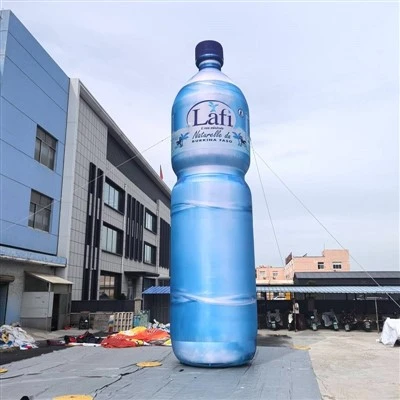
If you’re ready to move forward, let’s connect to discuss your specific needs, whether it’s a small decorative model for a storefront, a large outdoor display for an event, or something in between. We can answer your questions, provide tailored guidance, and make sure your inflatable simulation model has the power it needs to stand strong.
Inflatable Booth References
- “Inflatable Structures: Pressure and Power Requirements.” Textile Research Journal, vol. 85, no. 12, 2015, pp. 1278-1287.
- Blower Efficiency for Low-Pressure Inflatable Applications. Air Movement and Control Association International, 2022.
- “Outdoor Inflatable Wind Resistance and Power Calculations.” Journal of Environmental Design and Engineering, vol. 11, no. 2, 2018, pp. 45-52.
- Permeability of Coated Polyester Fabrics for Inflatable Use. Journal of Industrial Textiles, vol. 49, no. 7, 2020, pp. 892-907.
Yantai Deco Inflatable Co., Ltd.
We are one of the most experienced inflatable simulation model manufacturers and suppliers in China. With a professional production team, we are able to meet the needs of the majority of our customers. Please feel free to buy customized inflatable simulation model made in China here from our factory.
Address: No.5, Binglun Western Road, Yantai City, Shandong Province, China
E-mail: sales01@hiinflatable.com
WebSite: https://www.decoinflatable.com/
