If you’ve ever reached out for Babbitt combination bearings, chances are at some point you’ve paused to ask: “Do these parts actually come with after-sales support?” As someone who’s spent the last 12 years supplying Babbitt combination bearings to everything from mining operations in rural Colorado to precision paper mills in upstate New York, that question is the one I hear most often—not just from new customers, but from long-time clients who’ve been using our bearings for decades. Let me pull back the curtain on how we structure our after-sales service, because it’s not the vague “support team” that some suppliers throw around—it’s something built around the actual wear and tear, quirks, and unique demands of Babbitt bearings. Babbitt Combination Bearings
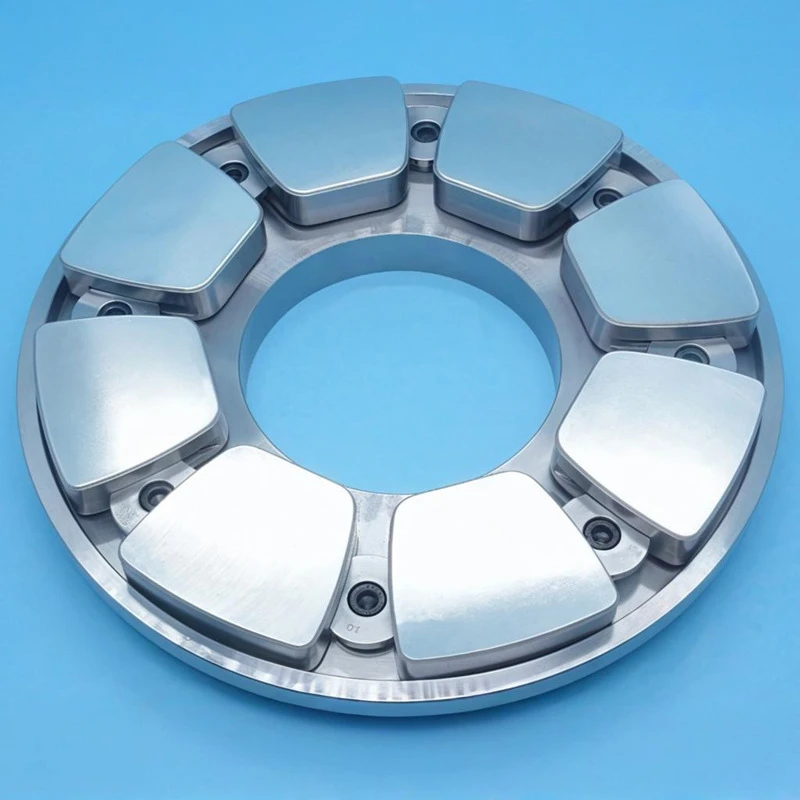
First, it helps to remember what makes Babbitt combination bearings different from, say, standard roller bearings. Babbitt (that soft, tin- or lead-based alloy) has been used for plain bearings since the 1800s because of its unmatched ability to embed small contaminants—dust, metal shavings, even tiny mill scale—without scoring the rotating shaft. But that softness is also why maintenance and support for these parts work differently than for ball bearings. If a customer’s standard bearing fails, the fix is often a replacement; with Babbitt combination bearings, 9 times out of 10, the issue isn’t a manufacturing defect—it’s improper installation, alignment, or even a slight mismatch between the bearing and the operating load. That’s where our after-sales team doesn’t just call to ask if the part arrived—it comes in.
Let’s start with the basics: every set of Babbitt combination bearings we ship has a built-in, no-fine-print after-sales window. It’s 12 months from the date of installation, not the date of delivery, because we know a bearing might sit in a warehouse for 3 months before being put to work. During that window, we cover two specific things right off the bat. First, any manufacturing defects—think a porosity void in the Babbitt lining that forms during our centrifugal casting process, or a misaligned bore in the steel back that’s pressed into the bearing housing. We don’t make customers ship the part back (unless they want to, but that’s rare for heavy industrial parts). Instead, we either mail a replacement, send a technician to on-site inspection, or cover the cost of a certified Babbitt re-babbitting service if the defect is in the lining. The second thing we cover is what we call “break-in support.” Babbitt bearings need a gentle first few hours of operation—light load, slow speed—to let the alloy bed in and seat correctly with the shaft. If a customer runs their new bearing at full load right away and it wears unevenly in the first month, we don’t write that off as “user error” and leave them holding the bag. We provide a free, 2-hour virtual check-in with one of our senior bearing engineers to walk them through adjusting the load or speed, or if needed, send a local team member to do a quick on-site run-in.
But the after-sales service doesn’t stop at the 12-month mark. That’s where our “Lifecycle Support” program comes in, and it’s one of the things that makes us different from small, part-time bearing suppliers who only care about the sale. Most of our clients are in sectors where Babbitt bearings are non-negotiable: heavy equipment, marine propulsion, pulp and paper mills, even power generation. These parts don’t fail on a schedule—they fail when a mill has a 72-hour downtime window, or a ship is in dry dock, or a mine’s haulage system needs to get back online before a shipment deadline. Our Lifecycle Support is available for the full operational life of the bearing (which, if maintained properly, can be 10+ years) and includes three core offerings. The first is on-site bearing analysis. We have a network of field technicians across North America who specialize in Babbitt bearings—they don’t work on ball bearings or roller bearings; their only job is to inspect Babbitt linings, measure wear, check alignment, and even do a quick ultrasonic test to look for hidden cracks in the alloy. When a customer calls us at 2 a.m. because their paper mill’s head bearing is making a weird noise, we can have a technician on-site in 24 hours or less, not a week later when their third shift is already down.
The second Lifecycle offering is custom re-babbitting. A lot of customers don’t know that Babbitt combination bearings aren’t throwaway parts. The steel back can last 20 years, but the Babbitt lining wears out in 5 to 8 years, depending on load. Instead of buying a new bearing every time, they can send the old one to our facility, where we strip the worn Babbitt, machine the steel back to precision, and cast a new lining tailored exactly to their shaft size and load requirements. We don’t do generic re-babbitting—every batch is tested with the same load and speed specs we use for new bearings, so there’s no surprise wear later. For example, last year we had a mining client in Wyoming that had 12 large thrust bearings for their dragline’s bucket wheel. Instead of ordering 12 new $15,000 bearings, they sent the old ones, we re-babbitted them, and saved them roughly $120,000—all backed by the same after-sales support as the original parts. The third Lifecycle offering is technical consulting. Our team doesn’t just sell bearings; we have metallurgists and mechanical engineers who specialize in Babbitt alloys. If a customer is upgrading their equipment, changing the operating load, or switching to a different type of lubricant, we don’t just say “here’s a bearing that fits.” We test their existing setup, adjust the alloy grade (tin vs. lead, which affects load capacity), and even suggest installation tools to prevent common mistakes, like over-torquing the bearing cap that can crack the Babbitt lining.
I should also be honest: after-sales service for Babbitt combination bearings has limits, and we make those clear before we ever ship a part. For example, if a customer modifies the bearing housing on-site without checking with us, or uses a lubricant that’s not rated for Babbitt (like a heavy gear oil that causes corrosion), we can’t cover that. We also don’t cover damage from improper handling during shipping—if a client stores a 500-pound bearing outside in the rain for 6 months without a protective cover, that’s not a manufacturing defect. But those limits are written in plain language on every sales quote and every bearing’s spec sheet, so there’s no confusion later.
Another thing I’m proud of is how we handle emergency after-sales requests. A lot of bearing suppliers will make you jump through hoops to get a replacement, requiring a service order number, 5 different photos, and a call during 9-to-5 business hours. We have a 24/7 support line specifically for our Babbitt combination bearing clients—staffed by two of our senior technicians at all times, not a call center in a different time zone. Last winter, a dairy plant in Wisconsin called us at 1 a.m. because their horizontal press bearing had failed, and they couldn’t process milk for their 10,000-cow herd. We walked them through a quick visual check to rule out a catastrophic failure, helped them adjust the press to run at half load to keep operations going until morning, and had a new bearing delivered by 8 a.m. the next day, with instructions on how to install it correctly so it wouldn’t fail again. That’s the stuff that sticks with customers—when you don’t have to explain the difference between a Babbitt lining and a steel back at 2 a.m., because we already know.
I also want to address a common misconception: some small shops will tell you that Babbitt bearings don’t need after-sales service because “they’re too simple.” That’s not true. For all their durability, Babbitt bearings are precision parts—your average marine propeller bearing, for example, runs 24/7 in saltwater, with variable thrust loads, and any misalignment over a tenth of a millimeter will cause uneven wear over time. Our after-sales isn’t just about fixing what breaks; it’s about preventing breakage before it happens. We send our clients annual reminders for bearing inspections, share free resources on Babbitt maintenance, and even host quarterly webinars on topics like how to diagnose early Babbitt wear without taking the bearing apart.
If you’re reading this and wondering if your current Babbitt combination bearing supplier is investing in after-sales, ask them a few questions: Do they cover on-site inspections, or do you have to ship every bad part back? Does their warranty start when you order, or when you install? Do they offer re-babbitting instead of forcing you to buy new parts? If the answer is no to any of those, you’re probably working with a supplier that sees bearings as just a commodity, not a long-term solution for your equipment.
At the end of the day, after-sales service for Babbitt combination bearings isn’t a add-on—it’s part of the product. The reason we’ve been in business for 17 years is not that we sell the cheapest bearings; it’s that when a customer has a problem, we show up. We don’t hide behind fine print, we don’t redirect you to a call center, and we don’t make you choose between downtime and a repair that breaks the bank.

If you’re in the market for Babbitt combination bearings, or you have an existing set that’s showing wear and you want to talk through your support options, we’re here to help. We don’t have a sales page that makes you fill out 10 forms, and we don’t waste your time with generic follow-up emails. Just reach out directly, and we’ll connect you with one of our bearing engineers who can answer all your questions about service, warranties, and lifecycle support tailored to your specific application.
Fluid Film Thrust Bearings References:
- Society of Tribologists and Lubrication Engineers. (2021). “Babbitt Bearing Maintenance and Lifecycle Management.” STLE Technical Report Series.
- American Society of Mechanical Engineers. (2019). “Standard Practice for Installation and Maintenance of Plain Bearings.” ASME B106.1M-2019.
- International Organization for Standardization. (2020). “Babbitt Alloys for Plain Bearings: Specifications and Testing.” ISO 4381:2020.
- The Babbitt Bearings Association. (2022). “After-Sales Support Best Practices for Industrial Plain Bearing Suppliers.” Industry Guideline.
Wenzhou Zhengbang Bearing Co., Ltd.
We are one of the most professional babbitt combination bearings manufacturers and suppliers in China. With abundant experience, we warmly welcome you to buy customized babbitt combination bearings at competitive price from our factory. If you have any enquiry about free sample, please feel free to email us.
Address: Units 1-1 and 3-1, Building 12, Yongxing Nanyuan Small and Micro Enterprise Startup Park, Binhai 2nd Road, Yongxing Subdistrict, Longwan District, Wenzhou City, Zhejiang Province.
E-mail: zbbearing@zbbearing.com
WebSite: https://www.zb-bearings.com/
