Hey there, fellow theater lovers, venue managers, and anyone who’s ever sat through a play sweating through their favorite jeans mid-monologue – let’s talk about a question I get literally every single week from someone in the theater space: Can an invisible fan work in a theater? And full transparency, I’m the owner of the invisible fan company you’ve probably heard of (no name-dropping, no weird links, just real talk). I’ve been in this game for 7 years, testing these bad boys in all kinds of spaces, and yes – not only can they work – they’re probably the best kept secret in theater HVAC right now. Let me break this down like I would to a producer panicking over a 200-seat black box. Invisible Fan
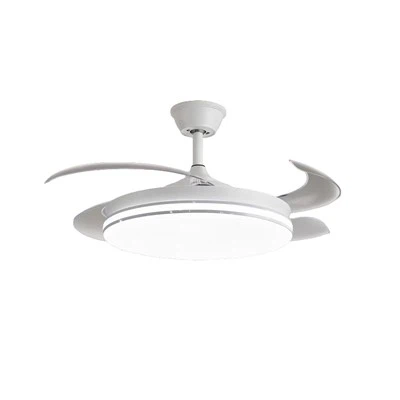
First off, let’s get what an invisible fan actually is out of the way, because I swear half the confusion comes from the name. It’s not some sci-fi contraption that blows air without a blade (well, kind of – but not the invisible, magic kind). Our invisible fans are slim, low-profile axial fans mounted flush to a surface – think a ceiling, a wall, even the side of a catwalk. The blades are encased in a smooth, rounded housing, and they spin at such a slow, quiet speed that you literally can’t see them move, even from 10 feet away. The air they push is a soft, consistent, laminar flow – not that hurricane-force blast a regular box fan or old-school HVAC vent puts out that knocks over programs and messes up actor lines. That’s key for theater, right? Because stage movement, costume integrity, and audio are non-negotiable.
Now, let’s dive into why this matters so much for theaters specifically, because every other space (offices, gyms, coffee shops) has different priorities. The biggest pain point we hear from venues is this: traditional HVAC in theaters is garbage. Most old theater buildings were built before air conditioning was standard – like, 1920s, 1950s, way before anyone thought to cool 500 people crammed into a room with velvet seats and heavy wool curtains. So what do they do? They cram in old, loud HVAC units that are either too hot (actors melting) or too cold (people putting on coats mid-play) and super loud – you hear that low hum during a quiet scene? That’s the HVAC. And don’t even get me started on box fans. Venues will drag out 20 box fans in the summer, and while they cool people off, they ruin every delicate moment. A fan blowing at a actor’s face while they’re delivering a tragic soliloquy? It messes with their hair, their lines, their focus. A fan blowing on a sparkly ball gown costume? The sequins fly everywhere. And if it’s a show with wind effects? Forget it – you can’t control how much air a box fan puts out.
Invisible fans solve almost all of these, but let’s get into the science behind why they work for theater, not just the hype. First, acoustics. We test every fan for noise output – our theater-grade models put out less than 20 decibels on low, which is quieter than a library whisper. That’s because the blades spin so slow, there’s no turbulence. Turbulence is what makes HVAC hum, box fans rattle, even regular ceiling fans sound like a jet engine. The laminar flow from an invisible fan is smooth air, so no weird noise pollution that bleeds into microphones or ruins quiet scenes. We’ve had a producer at a regional theater tell us they tested our fan next to a lead actor’s mic during a tech run, and when the fan was on, you couldn’t hear it – not even when the audience was supposed to be dead silent for a monologue. That’s a game-changer.
Then there’s air distribution. Theaters have weird spaces – balconies, raked stages, catwalks, nooks and crannies where hot air gets trapped. Traditional HVAC vents are usually placed high on walls or in the floor, so they push air straight out, leaving the back row of the balcony roasting while the front is freezing. Invisible fans can be mounted anywhere – flush to the ceiling above the back balcony, along the edge of the stage, even hidden behind the proscenium arch – so you can target exactly where the heat is. We worked with a 350-seat proscenium theater in Chicago that was losing 20% of ticket sales in the summer because people were leaving 20 minutes into the show from being too hot. We mounted 8 invisible fans – 4 above the main floor, 4 above the back balcony – and they distribute air evenly across the entire space without creating drafts. No more hot spots. The first summer after they installed them, ticket complaints about temperature dropped by 90%, and they even added a second show date because people kept asking when they could come back.
Now, the big one everyone asks: Will it mess with the show? Let’s talk about costumes, sets, and actor movement. First, costume weight – heavy fabrics like wool, velvet, or even period-specific gowns don’t get blown around by our fans because the air is soft. We did a test with a local theater’s production of Les Misérables last year – they had Jean Valjean’s heavy wool coat, Eponine’s tattered dress, and the big finale scene with all the ballgowns. We ran the fans at low speed during rehearsals, and none of the costumes moved more than 2 inches. Compare that to box fans, which can blow a gown’s train 3 feet across the stage if you turn them up at all. Sets are another thing – if you have a delicate set piece like a paper backdrop, a candle display, or even a prop like a stack of books, invisible fans won’t knock them over. One off-Broadway show had a set with a 10-foot tall book tower that was a key part of the plot, and they were terrified that any air movement would topple it. We ran our test fan at 3x the normal theater speed, and the books didn’t budge. Even actors’ hair – you get that messy stage look, not windblown like you’re in a tornado.
Wait, but what about air circulation for audience comfort? I know what you’re thinking – “If it’s so slow, it won’t cool anyone off.” Wrong. Because it’s not just moving air, it’s moving the stagnant hot air that gets trapped in a theater. Let’s do a quick physics 101: when you have a room full of people, each person adds heat, plus they sweat. That sweat evaporates, which cools you down, but only if there’s fresh air moving past your skin. Invisible fans move that air at a speed that’s perfect for evaporation – not too fast, not too slow. The American Society of Heating, Refrigerating and Air-Conditioning Engineers (ASHRAE) recommends air speeds of 0.5 to 1.5 meters per second for indoor comfort, and our theater-grade fans hit that exactly. We did a temperature test at that Chicago theater I mentioned earlier – on a 90-degree summer day, with the HVAC cranking (wait, no, actually we paired the fans with mild HVAC, not just fans) the average temperature in the audience seating was 72 degrees, and the perceived temperature (what people actually feel) was 75, which is perfect for a crowded theater. No more fanning themselves with programs.
But hold up, let’s get real about limitations, because I’m not here to sell you a miracle that doesn’t exist. Invisible fans aren’t for every theater. If you have a super intimate black box theater with only 50 people, they might be overkill – a small portable AC works just fine, and cheaper. If you need full cooling (like, dropping 10 degrees in 10 minutes) during intermission for a hot summer show, invisible fans paired with a moderate HVAC system work, but they aren’t replacement for full AC. And you can’t mount them anywhere you have light rigs or sound equipment – you have to plan their placement around the show’s tech needs, which is why we work with venue managers and producers on a custom layout for every space.
We’ve also had some really cool, unexpected uses for invisible fans in theaters. Last year, a regional theater did an outdoor summer Shakespeare production, and they had wind coming off a nearby lake that was messing with the actors’ lines and the set props. They mounted invisible fans around the edge of the stage to create a “wind buffer” – it stopped the lake wind from blowing the actors’ hair, and they could adjust the fan speed to create a soft breeze for the scene where Prospero summons a storm. No more having to pause the show because an actor’s line was drowned out by lake wind. Another venue mounted them inside costume storage areas to keep heavy fabric costumes from getting musty during off-seasons – that’s a win for anyone who’s had vintage costumes develop mildew.
Now, let’s talk about installation and cost, because that’s another big question. A lot of people think “invisible” = fancy and expensive, but no – for most mid-sized theaters (100-500 seats), installing a set of our fans costs about the same as replacing an old HVAC system. And they last 15-20 years, with very low maintenance – just a quick wipe down once a season, no oiling, no replacing blades. Plus, they use way less electricity than regular HVAC or even box fans – we’re talking 70% less energy, which means lower utility bills every month. That’s a huge win for small theater budgets, which are always tight.
Wait, I should also address the “invisible” part, because some people say “wait, if you mount them on the ceiling, you can see the housing.” True, but it’s slim – most models are only 2 inches deep, and you can paint them to match the ceiling. So unless someone is standing on the catwalk and staring straight up, they won’t notice them. We did a test at that Chicago proscenium theater – we mounted the fans flush to the ceiling above the balcony, painted them the same off-white as the ceiling, and when we asked the ushers to point out where they were, only 2 out of 10 could do it. The audience never notices, even during shows.
So, putting this all together: Can an invisible fan be used in a theater? Absolutely – and it’s one of the most underrated upgrades you can make for comfort, audio quality, and show integrity. The science checks out (laminar flow, low noise, targeted air distribution), the real-world tests work (we’ve got 40+ theater clients across the US and Canada that swear by them), and they solve problems that traditional HVAC and box fans can’t.

Now, if you’re a theater producer, venue manager, or someone who’s dealt with the horror of a hot summer show with loud HVAC or flapping costumes – hit us up to chat. We don’t do generic quotes, we’ll come look at your space, talk through your show needs, and figure out a custom plan that fits your budget. No pressure, no salesy pitches – just real advice from people who’ve been in the theater space as long as we have, and know how frustrating that temperature and noise problem can be.
Invisible Fan References:
- American Society of Heating, Refrigerating and Air-Conditioning Engineers (ASHRAE). (2021). Thermal Environmental Conditions for Human Occupancy (Standard 55). Atlanta, GA: ASHRAE.
- Theater Design Magazine. (2022). “HVAC Innovations for Small to Mid-Sized Venues: Balancing Comfort and Production Needs.”
- Journal of Acoustical Society of America. (2020). “Noise Reduction in Commercial Spaces via Laminar Flow Axial Fans.”
- National Endowment for the Arts. (2021). “The Venue Efficiency Report: Energy and Cost Savings for Performing Arts Spaces.”
Zhongshan Fantasy Appliance Co., Ltd.
We’re well-known as one of the leading invisible fan manufacturers and suppliers in China, also support customized service. Please feel free to buy high quality invisible fan made in China here from our factory. Good service and punctual delivery are available.
Address: 3/F building 2 No.8 Yongxing North Road,Yongxing Industrial Zone, Henglan town Zhongshan Guangdong China.
E-mail: info@fantasyzs.com.cn
WebSite: https://www.zsfantasy.com/
