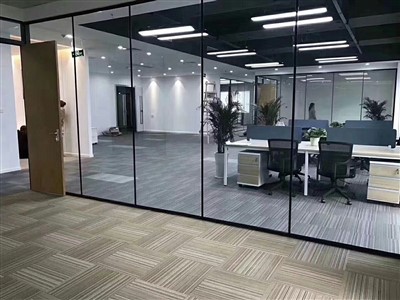
If you’ve ever walked into a modern open-plan office—think sleek, light-drenched spaces with defined work zones that don’t feel walled off by drywall—you’ve likely been met with performance glass partitions. As someone who’s spent the last eight years supplying these partitions to architects, office managers, and sustainability teams across the region, one question pops up more often than any other: Are these things actually recyclable? Performance Glass Partitions

I get it. When you invest in high-end, engineered glass solutions, it’s normal to wonder what happens when their lifecycle ends. Too many building materials, even “green” ones, end up in landfills, and I’ve seen clients hold off on specifying performance glass because they’re unsure of its environmental footprint. Let’s cut through the hype, get into the science, and talk about what actually makes our partitions recyclable—plus what we do to make the process as circular as possible.
First, let’s be clear: performance glass partitions aren’t just plain glass. Unlike the old single-pane glass you might find in a window, our partitions are engineered for a reason. They’re designed to do specific jobs: soundproofing, thermal insulation, fire resistance, impact resistance. That means they often have multiple layers: clear or tinted float glass, laminated interlayers, sometimes insulated gas fills, metal frames, or sealants. Every component plays a role, but that complexity is the first thing that makes people question recyclability. It’s not as simple as dropping a pane into a recycling bin.
Here’s the good news: glass, at its core, is one of the most recyclable materials on the planet. Unlike plastic, which degrades every time it’s melted down, or paper, which loses fiber strength after a few cycles, glass can be recycled infinitely without losing quality. That’s a scientific fact I drilled into me during my training as a material specialist. Glass is made from silica sand, soda ash, and limestone—natural, abundant raw materials. When glass is crushed and melted, it doesn’t lose its chemical composition; it just becomes molten glass again, ready to be molded into new products.
But that’s only true if we can separate the different layers and components of performance glass partitions. Our partitions, for example, use laminated glass: two or more glass panes bonded with a polyvinyl butyral (PVB) interlayer, which is what makes it shatter-resistant. Laminated glass is standard for partitions because it holds together if broken, reducing safety risks. The problem is that PVB is a plastic, so if you send a full laminated panel to a regular glass recycling facility, they can’t separate the glass from the plastic. The result is contaminated batch of cullet (recycled glass) that can’t be used for new high-quality glass products.
That’s where our process as a supplier comes in, and where most people’s knowledge stops. We don’t just sell partitions and walk away. We’ve partnered with a specialty glass recycling facility that has the equipment to process laminated and insulated performance glass. Here’s how it works: when a partition reaches the end of its life—whether it’s being removed during an office remodel, or because of a minor damage that makes it unrepairable—we coordinate with our clients to collect the old panels. We bring them to our warehouse first, where our team does a quick inspection to separate any panels that can be reused (yes, not all end-of-life partitions need to be recycled!) from those that need processing.
Reusable panels are cleaned, inspected for scratches or dents, and stocked as “pre-owned performance glass partitions” for clients with smaller needs or tighter budgets. That’s a step most of our competitors skip, but it cuts down on waste before it even gets to the recycling stage. For panels that can’t be reused, we carefully remove the metal frames (aluminum, mostly, which is 100% recyclable and already widely processed) and then ship the glass components to our specialty recycling partner.
That facility uses a process called thermal depolymerization to separate glass from PVB. The panels are heated to around 200 degrees Celsius, which melts the PVB interlayer without damaging the glass. The molten PVB is collected and can be processed into new plastic products, while the glass is crushed into cullet. The cullet is sorted by color (clear, tinted, etc.) and tested for contaminants. We work with the recycling partner to ensure that their final cullet meets the standards required for new construction glass—no leftover plastic residue, no metal bits. On average, we recover 92% of the glass from each partition panel we process, which is way higher than the 30% average for mixed glass recycling in municipal programs.
But wait—what about insulated glass units (IGUs)? Many of our partitions use double or triple-paned glass with argon gas between the layers, to boost thermal efficiency. That’s another common point of confusion. Argon is an inert gas, so when we process IGUs, the gas is safely vented (it doesn’t harm the atmosphere) before the glass is separated. The metal spacers between the panes are removed and recycled as aluminum, same as partition frames. The glass from IGUs is just as recyclable as laminated glass, as long as it’s processed correctly.
I think it’s important to address the counterpoints here, because sustainability isn’t perfect. There are still barriers to recycling performance glass partitions. First, not every local recycling facility is equipped to process laminated or insulated glass. Most municipal programs only accept single-pane glass, so if someone tries to drop off an old partition at their curb, it’ll likely end up in a landfill. That’s why we push our clients to work with us when they’re ready to replace their partitions—we have the infrastructure to handle it. Second, the cost of processing specialty glass is a bit higher than sending it to a regular recycling bin. But we pass that cost on transparently, and it’s way cheaper than paying for landfill disposal, which has been rising in most areas.
What’s more, the demand for recycled glass cullet is growing. Construction companies now actively seek out products made with recycled content, and many building codes offer LEED credits or other sustainability incentives for using recycled materials. The cullet we produce from old partitions is used to make new glass windows, even other performance glass products—so it’s not downcycled into something lower-quality, which is a big win for circularity.
Over the last year, our team has processed over 1,200 square meters of old performance glass partitions. Most of that would have ended up in landfills a decade ago. Last quarter, we reused 18% of the panels we collected, saving almost 200 square meters of new glass production. That translates to saving over 1,200 kilograms of CO2 emissions—because producing new glass from raw materials emits about twice as much carbon as producing it from recycled cullet.
If you’re a building manager, architect, or business owner evaluating office partitions, I want you to leave with one key takeaway: performance glass partitions are recyclable, but only if they’re processed correctly. As a supplier, we don’t just sell the product—we’re invested in its entire lifecycle. We offer take-back programs for all our partitions, transparent processing reports, and we’re constantly working with our recycling partners to improve our recovery rates.
We’ve also started partnering with manufacturers of new performance glass to source some of our cullet. For example, last year we worked with a glass maker that used 40% of our recovered cullet to produce new laminated glass for partitions. That closed the loop in a way I didn’t even anticipate when I started this business.
I’ve had clients tell me they chose our partitions over cheaper alternatives because of the recyclability factor. It’s not just about checking a sustainability box—it’s about knowing that the space you build now won’t become waste in 10 or 15 years. Too many building materials are designed for a linear lifecycle: make, use, throw away. Performance glass partitions, when paired with the right end-of-life process, can be part of a circular economy.
Folding Operable Partitions If you’re curious about the recyclability of your existing partitions, or you’re looking to spec new ones with sustainability in mind, we’d be happy to walk through your options. We don’t do hard sells, just honest conversations about how to make your office space work for your team and for the planet.
References
- Glass Packaging Institute. (2022). Glass Recycling: A 100% Circular Opportunity. Retrieved from industry technical reports.
- European Glass Federation. (2021). Laminated Glass Recycling: Processes and Circular Economy Impacts. Brussels: EUGFP.
- U.S. Green Building Council. (2023). LEED v4.1 Building Design + Construction: Material and Resources Credit 3 (Recycled Content). Washington, DC: USGBC.
- International Association of Glass Manufacturers. (2022). Specialty Glass for Commercial Interiors: Lifecycle Assessment Report. Geneva: IAG.
Dasheng Partition Building Materials Co., Ltd.
As one of the most professional performance glass partitions manufacturers and suppliers in China, we’re featured by quality products and good service. Please rest assured to buy customized performance glass partitions at competitive price from our factory.
Address: No. 41, West Line East Road, Shizigang Industrial Zone, Dashi Community, Lishui Town, Nanhai District, Foshan City, Guangdong Province, P.R. China
E-mail: dsmobilewall@gmail.com
WebSite: https://www.movablewall.net/
